7 Giải pháp dán tường máy sấy phun thực tế cho cây bột
7 Giải pháp dán tường máy sấy phun thực tế cho cây bột
Nếu bột bám trên tường của máy sấy phun, cặn lắng nhìn thấy được chỉ là triệu chứng cuối cùng. Nguyên nhân có thể là những giọt nước ướt, nhiệt độ chuyển thủy tinh thấp, phân phối không khí kém, chất rắn thức ăn không phù hợp, hoặc cài đặt bộ phun tạo ra phần quá khổ. Các giải pháp dán tường máy sấy phun của chúng tôi bắt đầu bằng dữ liệu về vật liệu và quy trình, không phải sự tăng nhiệt độ ngẫu nhiên.
Làm thế nào để bạn xác định cơ chế đằng sau cặn bám trên tường máy sấy phun?
Bản ghi đầu tiên nơi tiền gửi xuất hiện, nó xây dựng nhanh như thế nào, dù nó ướt hay giòn, và liệu nó có hình thành gần bộ phun không, hình nón, cửa thoát khí, hoặc xả sản phẩm. Vị trí lắng đọng giúp phân biệt quá trình sấy không hoàn toàn với luồng không khí kém, quỹ đạo giọt nước, hoặc độ bám dính vật liệu.
Sữa và bột whey có thể trở nên dính khi sản phẩm đạt đến nhiệt độ mà chất rắn vô định hình của nó mềm ra. Tetra Pak tham khảo sữa và bột whey giải thích lý do tại sao phải đánh giá cùng nhau đặc tính của sản phẩm và nhiệt độ khi lập kế hoạch cho các giải pháp dán tường máy sấy phun.
Những đặc tính thức ăn nào cần được kiểm tra trước khi thay đổi máy sấy?
Đo chất rắn thức ăn, độ nhớt, Tỉ trọng, phân bố kích thước hạt, hành vi chuyển tiếp thủy tinh khi có liên quan, và độ ẩm đầu ra mục tiêu. Thức ăn có hàm lượng chất rắn thấp làm tăng lượng nước và có thể để lại những giọt nước ướt khi chúng chạm vào tường. Thức ăn có độ nhớt cao cũng có thể làm thay đổi quá trình nguyên tử hóa và hình thành giọt.
Tại CTCPSTECH, thử nghiệm vật liệu miễn phí được sử dụng để xây dựng sơ đồ kỹ thuật dành riêng cho quy trình. Mục tiêu là kết nối hành vi thức ăn với sự thay đổi nồng độ có kiểm soát, nguyên tử hóa, nhiệt độ không khí, luồng không khí, hoặc hình học buồng thay vì xử lý mọi loại bột như cùng một loại vật liệu.
Có thể tập trung thức ăn và nguyên tử hóa làm giảm độ bám dính?
Tăng chất rắn thức ăn có thể làm giảm lượng nước phải bay hơi, nhưng nguồn cấp dữ liệu phải duy trì được khả năng bơm và nguyên tử hóa. Lựa chọn bộ phun và tốc độ vận hành ảnh hưởng đến kích thước giọt, thời gian sấy, mật độ bột, và khả năng vật liệu ướt chạm tới tường.
Kế hoạch giải pháp dán tường máy sấy phun thực tế phải xác định phạm vi giọt mục tiêu, nhiệt độ thức ăn, cài đặt vòi phun hoặc máy phun quay, và độ ẩm đầu ra cho phép. Những thay đổi cần được xác nhận bằng cách thu hồi bột, độ ẩm đồng đều, và kiểm tra cặn lắng—không chỉ bởi việc không có miếng vá tường có thể nhìn thấy được.
Sự phân bố khí vào và hình dạng buồng ảnh hưởng như thế nào đến cặn lắng?
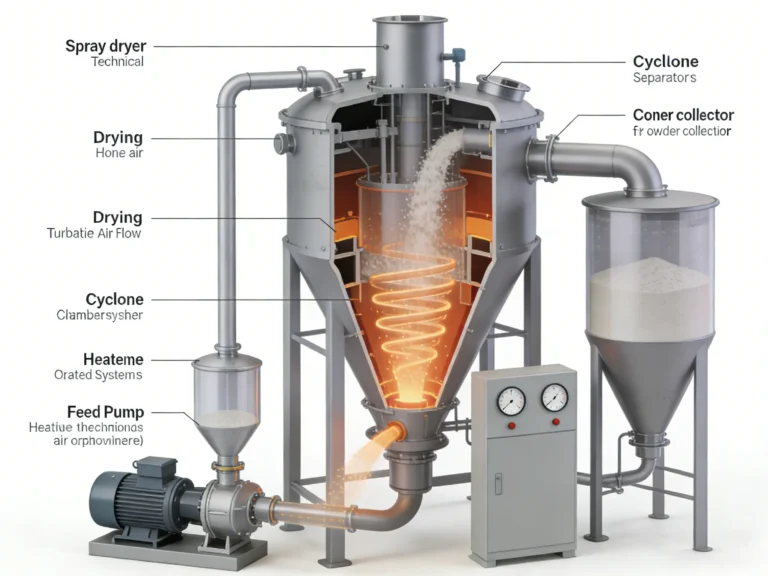
Kiểu không khí phải mang các giọt qua vùng sấy mà không đẩy vật liệu ướt trực tiếp về phía thành buồng. Phân phối kém, máy phân tán không khí không phù hợp, hoặc giả định thời gian cư trú không chính xác có thể tạo ra vùng ẩm ướt cục bộ ngay cả khi nhiệt độ trung bình đầu ra có vẻ chấp nhận được.
Các kỹ sư của chúng tôi xem xét lượng không khí, hồ sơ nhiệt độ, kích thước buồng, tải lốc xoáy, và xả bột cùng nhau. Cái này 100% Phương pháp sản xuất theo kích thước đặc biệt quan trọng khi cùng một dây chuyền phải xử lý thực phẩm, dược phẩm, hóa chất, hoặc bột khoáng có đặc tính bám dính khác nhau.
Biện pháp kiểm soát vận hành nào giúp ngăn chặn cặn bám trên tường tái diễn?
Người vận hành nên xu hướng tốc độ cấp liệu, thức ăn rắn, nhiệt độ đầu vào, nhiệt độ đầu ra, tốc độ phun hoặc áp suất vòi phun, độ ẩm khí thải, và độ ẩm sản phẩm. Một sự thay đổi trong một biến có thể đẩy quá trình ra ngoài cửa sổ sấy khô an toàn. Việc ghi lại các giá trị này giúp khắc phục sự cố nhanh hơn và giảm việc điều chỉnh thử và lỗi lặp lại.
Sử dụng hệ thống điều khiển để cảnh báo độ ẩm khí thải tăng, áp suất thức ăn không ổn định, hoặc sự thay đổi độ ẩm đầu ra trước khi cặn bám trở nên nghiêm trọng. Thiết kế chu trình nhiệt được tối ưu hóa và bộ trao đổi nhiệt hiệu suất cao cũng có thể giảm áp suất năng lượng trong khi vẫn duy trì quy trình trong phạm vi vận hành dành riêng cho vật liệu của nó.
Danh sách kiểm tra kiểm tra nhà cung cấp: 5 Các tài liệu cần yêu cầu trước khi ký đơn đặt hàng
- Báo cáo thử nghiệm vật liệu và đường cong sấy cho thức ăn thực tế.
- Thông số kỹ thuật phun sương với cơ sở kích thước giọt và phạm vi hoạt động.
- Tính toán phân phối không khí và thời gian lưu trú cho buồng đề xuất.
- Bản vẽ truy cập làm sạch và quy trình loại bỏ cặn.
- Mẫu báo cáo kiểm tra trước khi giao hàng cộng với kế hoạch vận hành và phản hồi sau bán hàng.
Câu hỏi thường gặp
Q: Nguyên nhân đầu tiên cần kiểm tra khi bột dính vào tường máy sấy phun là gì? Bắt đầu với hành vi nhiệt độ dính, thức ăn rắn, kích thước giọt, và độ ẩm đầu ra. JSCTECH sử dụng thử nghiệm vật liệu và xem xét quy trình trước khi thay đổi thiết kế buồng.
Q: Có thể tăng nhiệt độ đầu vào giải quyết vấn đề dính tường? Không phải lúc nào cũng vậy. Nhiệt độ đầu vào cao hơn có thể đẩy nhanh quá trình làm khô bề mặt, nhưng nó có thể làm hỏng các sản phẩm nhạy cảm với nhiệt. So sánh đầu vào hoàn chỉnh, chỗ thoát, cho ăn, nguyên tử hóa, và cửa sổ luồng không khí.
Q: Làm thế nào nhà cung cấp có thể chứng minh rằng máy sấy phun mới sẽ giảm khả năng dính? Yêu cầu dữ liệu kiểm tra vật liệu, kết quả đường cong sấy, cơ sở nguyên tử hóa, tính toán luồng không khí hoặc thời gian lưu trú, và thiết kế truy cập làm sạch gắn liền với cơ chế dính cụ thể.
Khám phá của chúng tôi phạm vi thiết bị sấy tùy chỉnh và đọc hướng dẫn bảo trì vòi phun máy sấy phun trước khi hoàn tất kế hoạch khắc phục sự cố. JSCTECH cung cấp thiết kế sơ đồ kỹ thuật miễn phí, thử nghiệm vật liệu, và hỗ trợ phản hồi 24 giờ.
Liên hệ với Leta qua WhatsApp với các đặc tính nguồn cấp dữ liệu của bạn và ký gửi ảnh để các kỹ sư của chúng tôi có thể xem xét các giải pháp dán tường máy sấy phun phù hợp nhất. Bao gồm chất rắn thức ăn, độ nhớt, nhiệt độ đầu vào và đầu ra, cài đặt phun, và khoảng thời gian làm sạch hiện tại của bạn để có đánh giá đầu tiên hữu ích hơn.