7 Practical Spray Dryer Wall Sticking Solutions for Powder Plants
7 Practical Spray Dryer Wall Sticking Solutions for Powder Plants
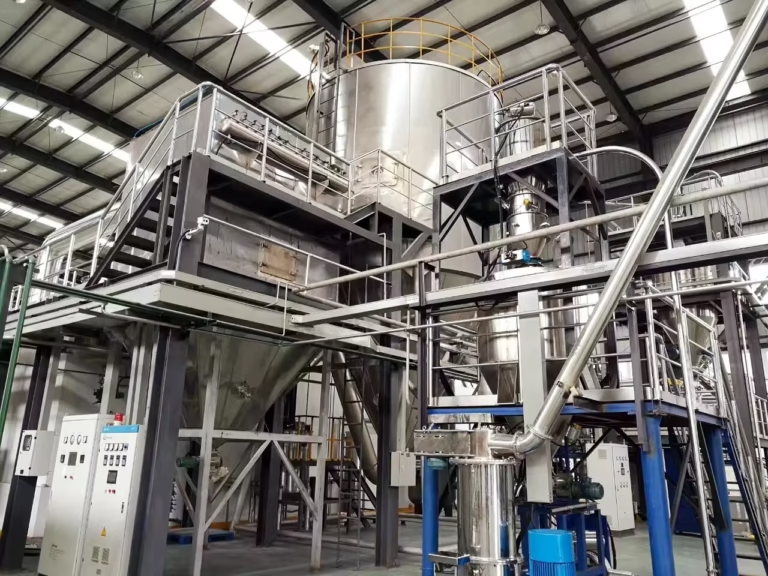
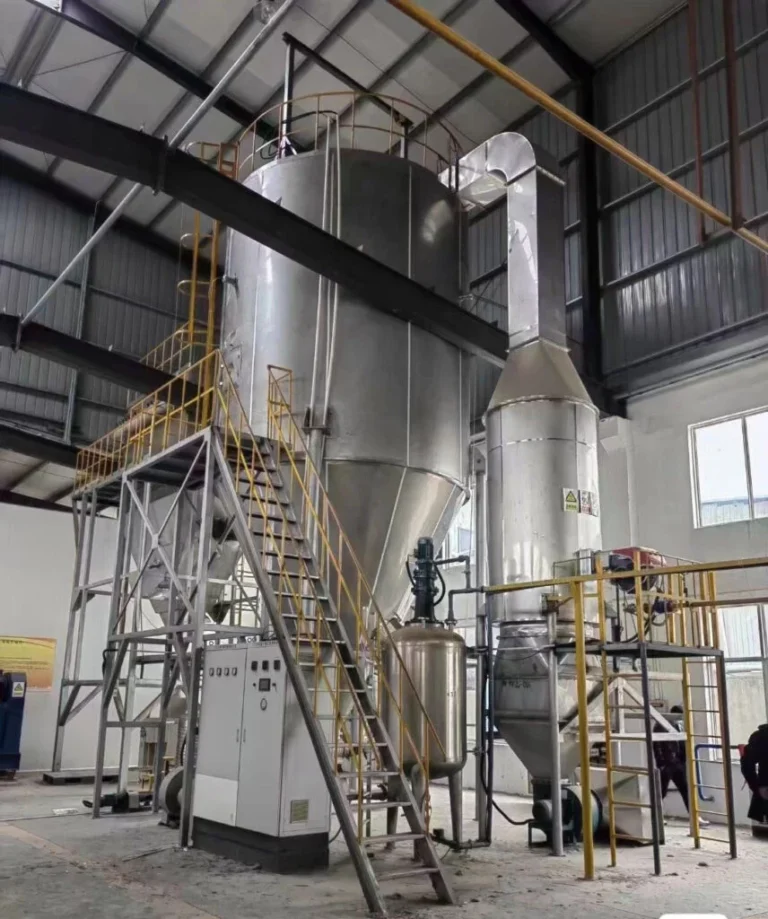
If powder is building on a spray-dryer wall, the visible deposit is only the final symptom. The cause may be wet droplets, a low glass-transition temperature, poor air distribution, unsuitable feed solids, or an atomizer setting that creates an oversized fraction. Our spray dryer wall sticking solutions begin with the material and process data, not a random temperature increase.
How do you identify the mechanism behind spray-dryer wall deposits?
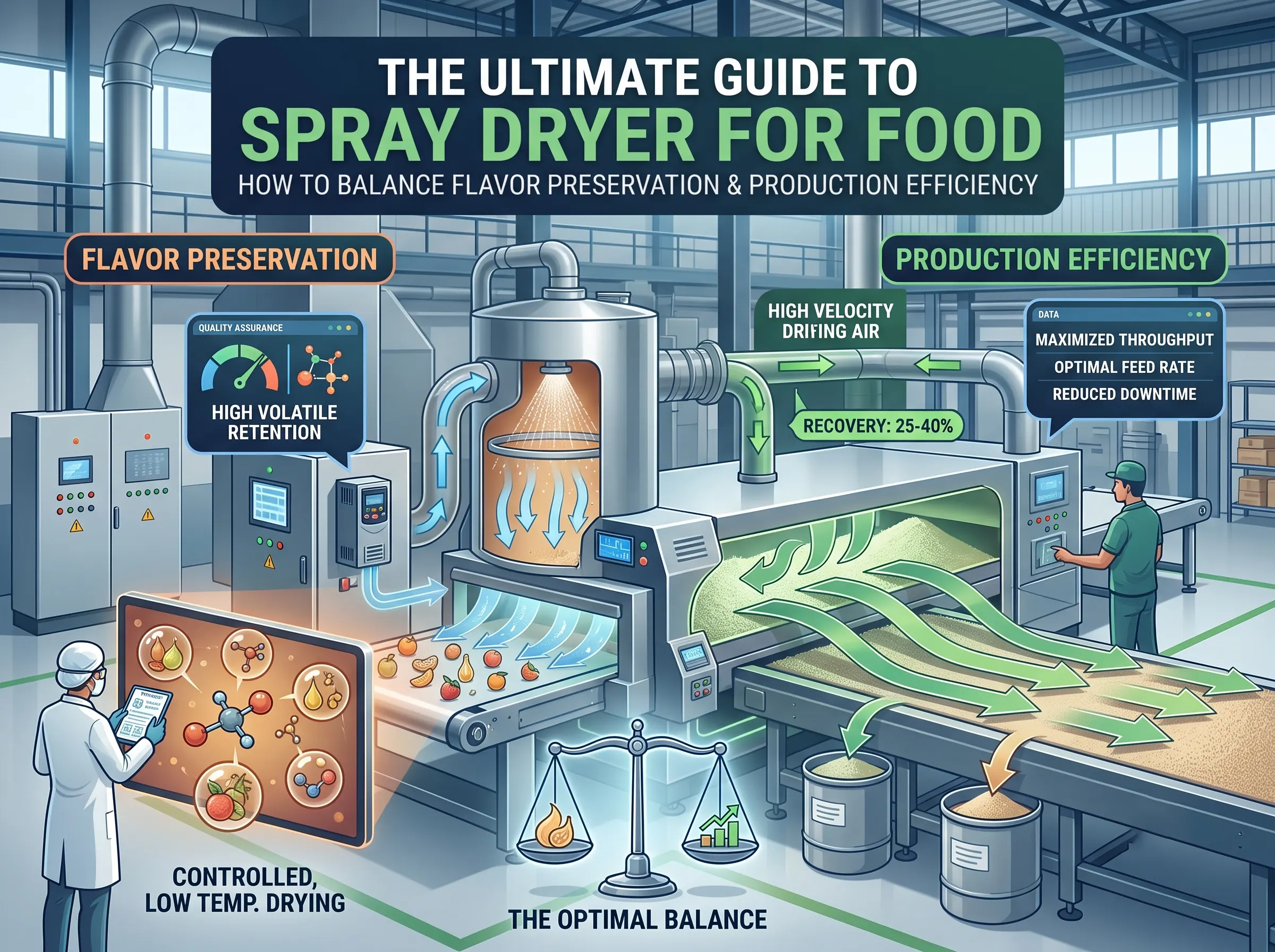
First record where the deposit appears, how quickly it builds, whether it is wet or brittle, and whether it forms near the atomizer, cone, air outlet, or product discharge. Deposit location helps distinguish incomplete drying from poor airflow, droplet trajectory, or material adhesion.
Dairy and whey powders can become sticky when the product reaches a temperature range where its amorphous solids soften. The Tetra Pak milk and whey powder reference explains why product behavior and temperature must be evaluated together when planning spray dryer wall sticking solutions.
Which feed properties should be tested before changing the dryer?
Measure feed solids, viscosity, density, particle-size distribution, glass-transition behavior where relevant, and the target outlet moisture. A low-solids feed increases the water load and can leave droplets wet when they reach the wall. A highly viscous feed can also alter atomization and droplet formation.
At JSCSTECH, free material testing is used to build a process-specific technical scheme. The goal is to connect feed behavior to a controlled change in concentration, atomization, air temperature, airflow, or chamber geometry instead of treating every powder as the same material.
Can feed concentration and atomization reduce sticking?
Increasing feed solids can reduce the amount of water that must be evaporated, but the feed must remain pumpable and atomizable. Atomizer selection and operating speed influence droplet size, drying time, powder density, and the likelihood of wet material reaching the wall.
A practical spray dryer wall sticking solutions plan should define the target droplet range, feed temperature, nozzle or rotary-atomizer setting, and allowable outlet moisture. Changes should be confirmed by powder recovery, moisture uniformity, and deposit inspection—not only by the absence of a visible wall patch.
How do inlet air distribution and chamber geometry affect deposits?
The air pattern must carry droplets through the drying zone without pushing wet material directly toward the chamber wall. Poor distribution, an unsuitable air disperser, or an incorrect residence-time assumption can create a local wet zone even when average outlet temperature looks acceptable.
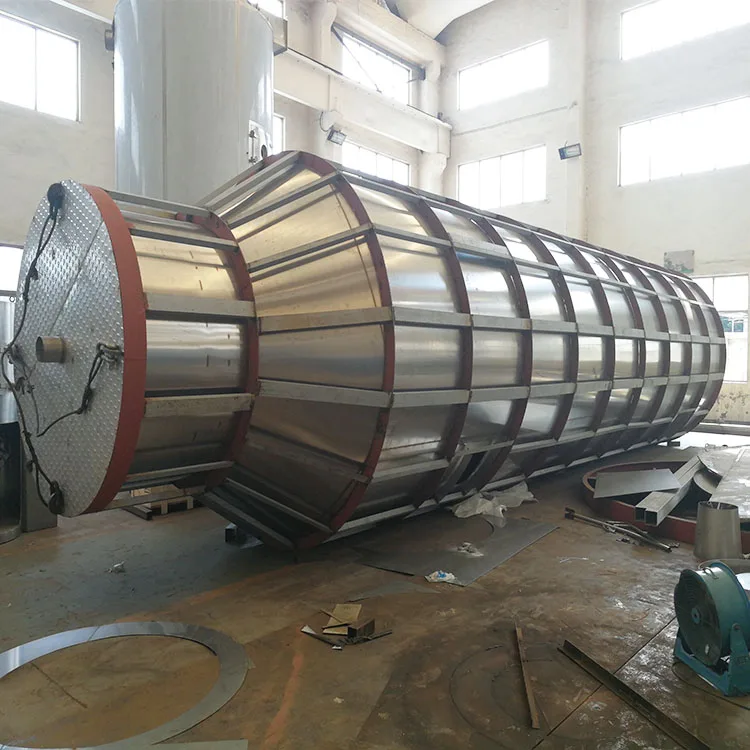
Our engineers review air volume, temperature profile, chamber dimensions, cyclone loading, and powder discharge together. This 100% made-to-measure approach is especially important when the same line must handle food, pharmaceutical, chemical, or mineral powders with different adhesion behavior.
What operating controls help prevent recurring wall deposits?
Operators should trend feed rate, feed solids, inlet temperature, outlet temperature, atomizer speed or nozzle pressure, exhaust humidity, and product moisture. A change in one variable can move the process outside the safe drying window. Recording these values makes troubleshooting faster and reduces repeated trial-and-error adjustments.
Use the control system to flag rising exhaust humidity, unstable feed pressure, or a change in outlet moisture before deposits become severe. Optimized thermal-cycle design and high-efficiency heat exchangers can also reduce energy pressure while keeping the process within its material-specific operating window.
Supplier Audit Checklist: 5 Documents to Request Before Signing a Purchase Order
- Material test and drying-curve report for the actual feed.
- Atomization specification with droplet-size basis and operating range.
- Air-distribution and residence-time calculation for the proposed chamber.
- Cleaning-access drawing and deposit-removal procedure.
- Pre-shipment inspection report sample plus commissioning and after-sale response plan.
Frequently Asked Questions
Q: What is the first cause to check when powder sticks to a spray-dryer wall? Start with sticky-temperature behavior, feed solids, droplet size, and outlet moisture. JSCSTECH uses material testing and process review before changing chamber design.
Q: Can increasing inlet temperature solve wall sticking? Not always. Higher inlet temperature can accelerate surface drying, but it may damage heat-sensitive products. Compare the complete inlet, outlet, feed, atomization, and airflow window.
Q: How can a supplier prove that a new spray dryer will reduce sticking? Ask for material-test data, drying-curve results, atomization basis, airflow or residence-time calculations, and a cleaning-access design tied to the specific sticking mechanism.
Explore our custom drying equipment range and read the spray dryer nozzle maintenance guide before finalizing a troubleshooting plan. JSCSTECH provides free technical scheme design, material testing, and 24-hour response support.
Contact Leta via WhatsApp with your feed properties and deposit photos so our engineers can review the most likely spray dryer wall sticking solutions. Include feed solids, viscosity, inlet and outlet temperatures, atomizer settings, and your current cleaning interval for a more useful first assessment.