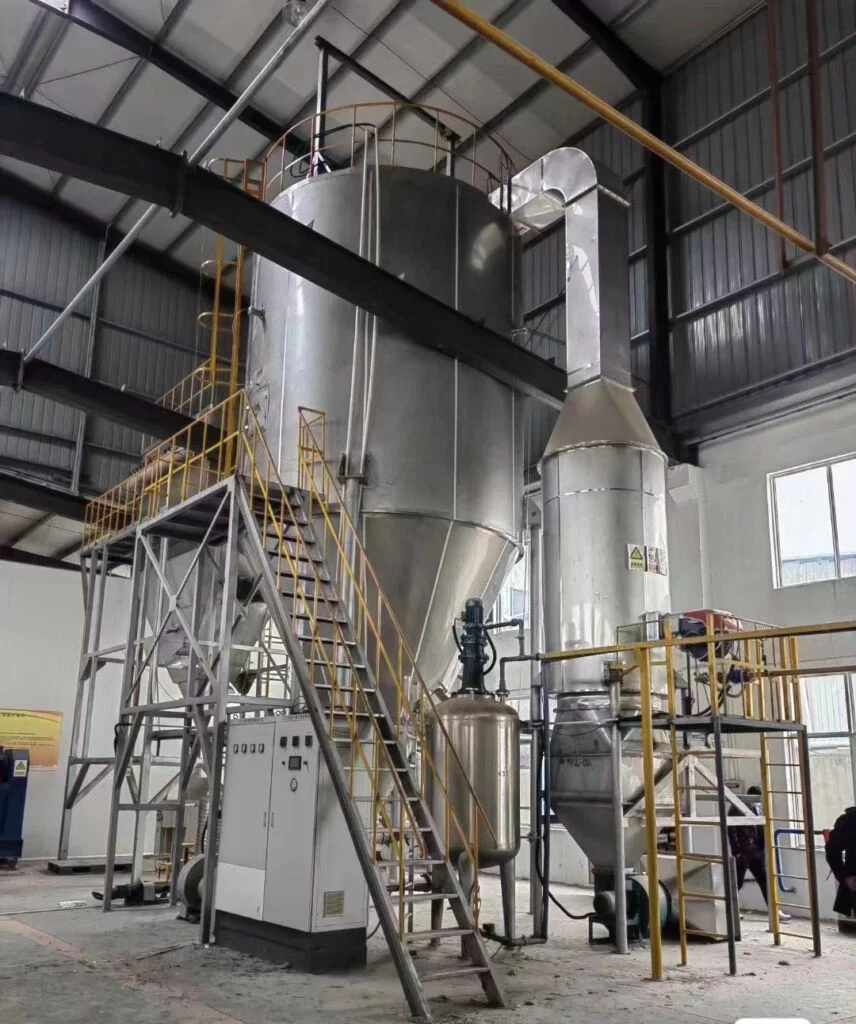
5 Critical Spray Dryer Nozzle Maintenance Tips for Consistent Powder Quality
5 Critical Spray Dryer Nozzle Maintenance Tips for Consistent Powder Quality
When powder moisture, particle size, or bulk density begins to drift, the atomization assembly is one of the first places to investigate. This guide to spray dryer nozzle maintenance gives procurement and engineering teams a practical inspection sequence for food, pharmaceutical, chemical, and mineral feeds.
Jiangsu Changshi Drying Technology Co., Ltd. has more than 20 years of experience manufacturing drying equipment. Our process starts with the feed material: viscosity, abrasiveness, corrosivity, solids content, and the required powder properties determine the nozzle arrangement and the maintenance plan.
Use the steps below to connect maintenance decisions with production evidence. Record the observation, the likely mechanism, the corrective action, and the result after the next batch.
How does spray dryer nozzle maintenance prevent quality drift?
A nozzle converts liquid feed into droplets. Orifice geometry, pressure, feed viscosity, and swirl conditions influence droplet size and the spray cone. A small change can alter residence time and leave droplets too wet when they approach the chamber wall. This is why spray dryer nozzle maintenance belongs in the process-control record.
For that reason, spray dryer nozzle maintenance should be treated as a process-control activity, not only a spare-parts task. Compare pressure, feed rate, outlet moisture, particle-size distribution, and visible deposits against a known-good operating record.
- Record the feed material and solids content for each inspection.
- Compare current pressure and flow readings with the approved process range.
- Quarantine parts that show rounding, cracking, blockage, or corrosion.
- Release a replacement only after a short product-quality check.
Which wear signs should engineers check first?
Erosion can enlarge or distort an orifice, while deposits can narrow the passage or disturb the swirl chamber. Both conditions may appear as a changed spray angle, unstable pressure, a wider particle-size distribution, or more powder on the chamber wall.
Inspect the orifice under suitable magnification and compare it with the supplier drawing. Do not rely on visual appearance alone when the process is sensitive; measure the relevant dimension with the method specified by the component supplier.
JSCSTECH recommends linking the inspection to the actual feed. A nozzle suitable for a low-abrasion food solution may not suit mineral slurry or a corrosive chemical feed. Material precision testing helps identify the correct wear-resistant construction before repeated failures occur.
How should a spray dryer nozzle be cleaned without damaging it?
Cleaning removes deposits that change the flow path and create contamination risk. The method must match the nozzle material and the hygiene requirements of the line. A hard wire or improvised tool can scratch an orifice and permanently change the spray pattern.
Use the cleaning tools and chemical compatibility instructions supplied with the assembly. For a food or pharmaceutical line, document the cleaning step, rinse confirmation, visual result, and return-to-service approval. FDA current good manufacturing practice guidance provides a useful reference for controlled manufacturing processes and equipment records.
Action plan: create a one-page cleaning record with the nozzle ID, feed material, cleaning method, operator, inspection result, and release decision. This turns an informal task into traceable spray dryer nozzle maintenance. It also gives the engineering team a reference for the next spray dryer nozzle maintenance review.
How do pressure and alignment affect nozzle performance?
Feed pressure is a useful diagnostic signal. A lower-than-normal reading may indicate wear, leakage, or a change in feed properties. A higher reading can indicate a blockage or crystallized material in the flow path.
Alignment matters because the spray cone must work with the chamber air pattern. An off-centre assembly can increase wall wetting even when the nozzle is clean. Check the mounting face, seal, centring feature, and tightening sequence during every reassembly.
When the process is non-standard, a made-to-measure mount and process test are safer than assuming a universal arrangement. JSCSTECH offers custom machine design and material testing so the maintenance plan can be connected to the complete drying system.
How should buyers choose nozzle materials and spare parts?
Choose the material from the feed properties and the required service conditions. Consider abrasion, corrosion, temperature, cleaning chemistry, and the consequences of a failed batch. Stainless steel, hardened alloys, ceramic, or carbide components may each be appropriate in different applications, but the decision requires a documented engineering basis.
Ask for the component drawing, material certificate, dimensional tolerance, and cleaning compatibility. Keep one approved reference part or inspection record so incoming spares can be compared before installation.
For international projects, spare-parts planning should also include packaging, identification, lead-time communication, and technical support. JSCSTECH provides a 24-hour response channel for overseas technical questions; confirm the actual contact route and escalation process in your purchase documents.
What documents should be requested before ordering?
Supplier Audit Checklist: 4 Documents to Request Before Signing a Purchase Order
Use this checklist during RFQ review. The purpose is to verify fit, traceability, and serviceability rather than to compare catalogue wording.
- Material certificate: verifies the alloy, ceramic, or carbide grade supplied.
- Orifice and dimensional inspection report: verifies the geometry against the approved drawing.
- Cleaning and assembly procedure: verifies that operators can service the part without damaging it.
- Process-test or acceptance plan: defines which pressure, moisture, particle-size, and wall-deposit results will be checked.
A credible supplier should explain which items are measured, which are calculated, and which must be confirmed with your own material. If a requested number cannot be verified before testing, label it as a target rather than a guaranteed result.
Frequently Asked Questions About Spray Dryer Nozzle Maintenance
How often should a spray dryer nozzle be inspected?
Inspect the nozzle at a defined interval based on feed abrasiveness, pressure stability, and product quality records. JSCSTECH recommends setting the interval after material testing rather than applying one universal replacement date. A supplier should provide inspection criteria for the specific nozzle material and feed composition.
Can a worn spray dryer nozzle be repaired?
A worn orifice should normally be replaced when its geometry no longer meets the process specification. Polishing or drilling can change the spray pattern and droplet distribution. Ask the supplier for the original orifice tolerance and a replacement inspection record before returning a part to service.
How can nozzle maintenance reduce wall sticking?
Correct cleaning, stable feed pressure, and accurate alignment reduce the risk of oversized or off-centre droplets reaching the chamber wall. JSCSTECH uses material testing and made-to-measure process design to match the atomization arrangement to the feed. Validate the result with moisture, particle-size, and wall-deposit records.
What should a buyer ask a spray dryer supplier before ordering nozzles?
Ask for material specifications, orifice tolerances, cleaning instructions, and a process test plan. These documents show whether the component is matched to your feed rather than copied from a standard catalogue. Confirm the supplier’s technical response process and spare-parts support in writing.
For a process-specific review, contact the JSCSTECH technical team for a material test and made-to-measure drying proposal. You can also review our spray dryer sticking troubleshooting guide and food spray dryer guide before sending your feed details.
FDA CGMP regulations provide an official reference for controlled pharmaceutical manufacturing practices. For a quick technical response from JSCSTECH, contact Leta on WhatsApp.