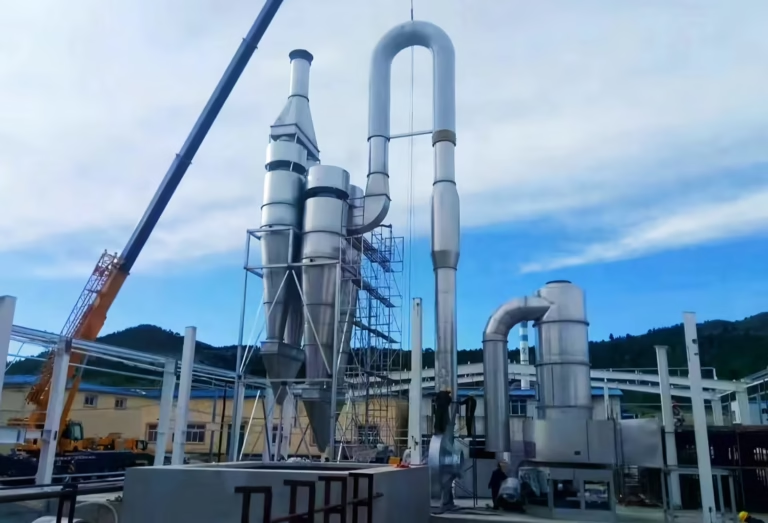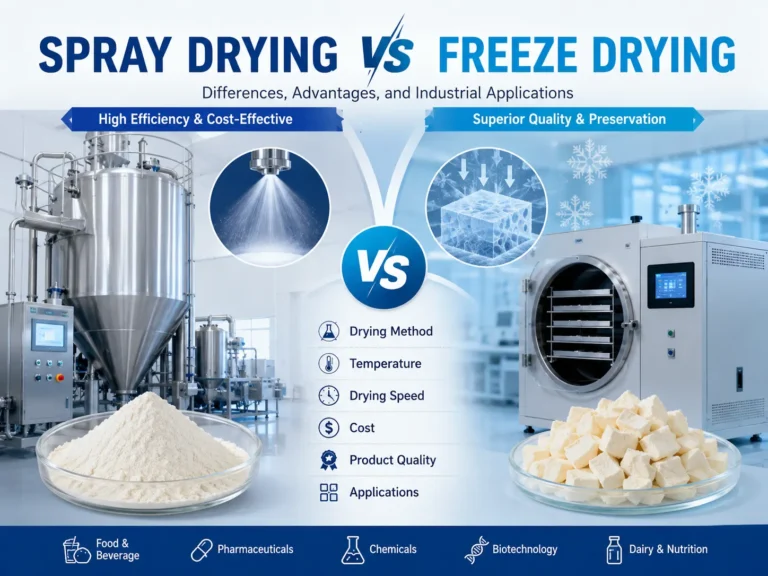
Sécheur par pulvérisation ou sécheur à tambour rotatif: Quel est le meilleur pour votre matériel?
Sécheur par pulvérisation ou sécheur à tambour rotatif
Lorsque vous planifiez une nouvelle ligne de traitement de poudre, l’une des décisions les plus critiques que vous prendrez sera de choisir la bonne technologie de séchage. Pour de nombreux matériaux, le choix se résume à deux options populaires: séchoirs par pulvérisation vs séchoirs à tambour rotatif. Les deux fonctionnent bien pour le séchage industriel, mais ils sont conçus pour des types de matériaux et des objectifs de production complètement différents..
Choisissez le mauvais, et vous pourriez vous retrouver avec des coûts énergétiques plus élevés, moins bonne qualité du produit, ou même un séchoir qui ne peut pas du tout gérer votre matière première. Décomposons les principales différences, applications typiques, et comment choisir.
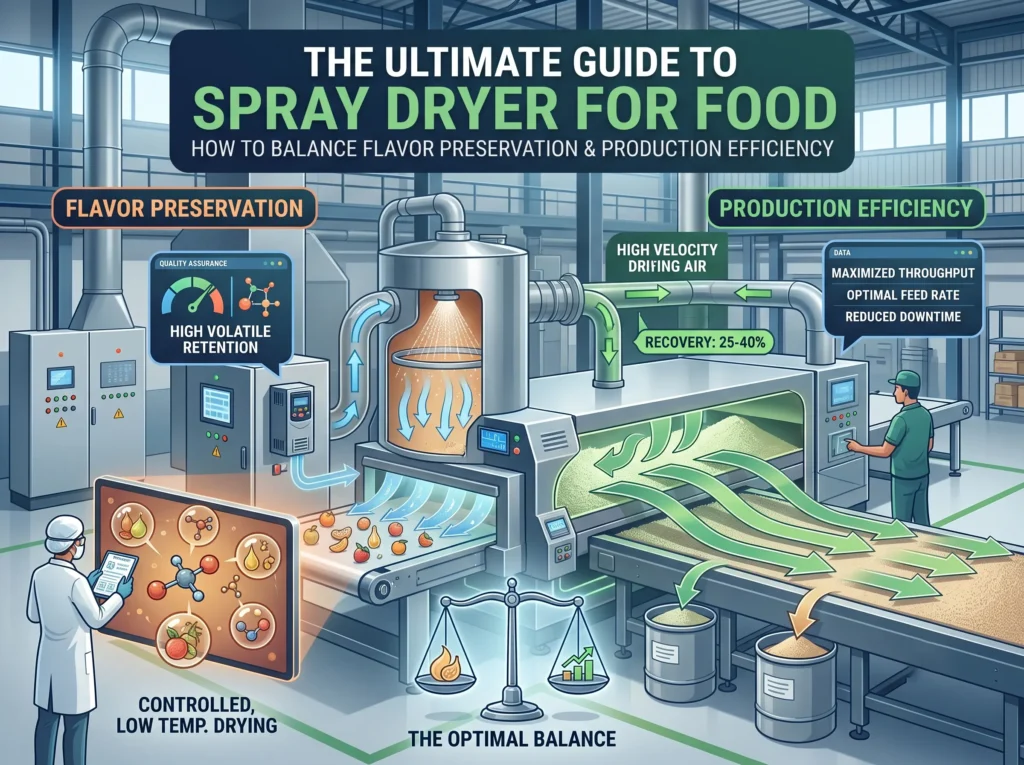
Qu'est-ce qu'un De séchage par pulvérisation et quand devriez-vous l'utiliser?
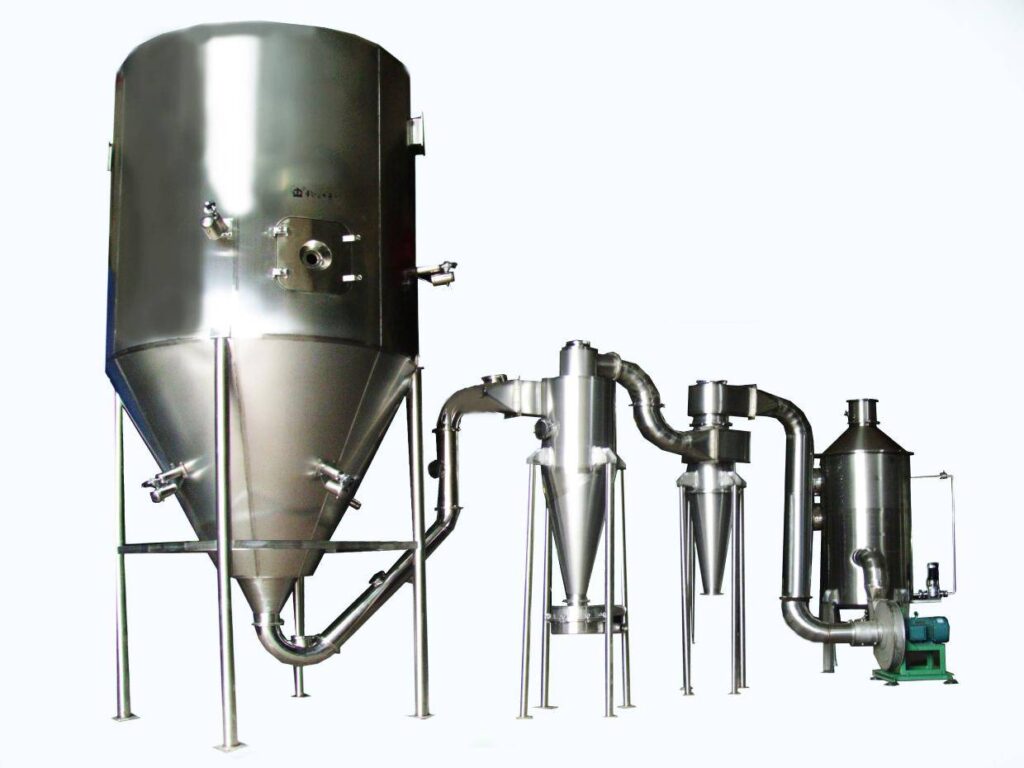
Un séchoir par pulvérisation atomise votre alimentation liquide en fines gouttelettes, souffle ensuite de l'air chaud à travers le spray pour évaporer rapidement l'humidité. Cela produit une poudre fluide directement à partir de l'alimentation liquide en une étape continue..
Meilleures applications pour les séchoirs par pulvérisation:
- Lait en poudre et produits laitiers
- Café et thé instantanés
- API pharmaceutique et extraits de plantes
- Arômes et colorants alimentaires
- Poudres chimiques fines nécessitant une taille de particule contrôlée
Le plus grand avantage du séchage par pulvérisation est qu’il produit une poudre prête à l’emploi en une seule étape., avec un excellent contrôle de la distribution granulométrique et de la teneur en humidité. Il est également plus doux que le séchage rotatif pour les matériaux sensibles à la chaleur lorsqu'il est correctement configuré.
Qu'est-ce qu'un séchoir à tambour rotatif et quand devriez-vous l'utiliser?
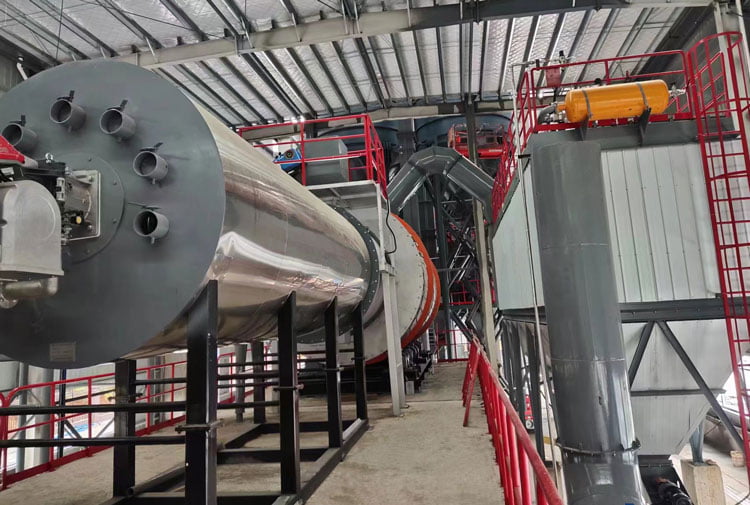
Un séchoir à tambour rotatif (ou séchoir rotatif) est un tambour cylindrique rotatif qui fait culbuter lentement votre matériau humide lorsque l'air chaud le traverse. L'action continue de culbutage assure un transfert de chaleur constant, ce qui le rend idéal pour les matériaux à viscosité plus élevée et les gâteaux humides qui ne peuvent pas être atomisés.
Meilleures applications pour les séchoirs à tambour rotatif:
- Pâtes à haute viscosité (levure, amidon, manioc)
- Gâteaux de filtration et boues
- Sable minéral, minerai, et agrégats
- Matières organiques de grande taille de particules
- Biomasse et copeaux de bois
Les séchoirs à tambour rotatif traitent des matériaux à viscosité plus élevée qui ne peuvent tout simplement pas être pompés et atomisés pour le séchage par pulvérisation.. Ils sont également généralement plus robustes pour une production continue et intensive de particules de plus grande taille..
Comparaison clé: Sécheur par pulvérisation ou sécheur à tambour rotatif
| Facteur | De séchage par pulvérisation | Sécheur à tambour rotatif |
|---|---|---|
| Type d'alimentation | Liquide pompable / boue | Gâteau mouillé / pâte à haute viscosité / granulés |
| Forme du produit | Poudre fine fluide | Granules plus grossiers / flocons |
| Contrôle de la taille des particules | Excellent | Bien |
| Efficacité énergétique | Bon pour les poudres fines | Excellent pour les aliments riches en solides |
| Débit | Continu, moyen à élevé | Continu, très élevé |
Comment choisir entre eux pour votre processus
Posez-vous ces questions pour faire le bon choix:
- Quel est votre formulaire de flux ?? Si vous pouvez le pomper sous forme de liquide/boue et que vous avez besoin d'une poudre fine ? séchoir par pulvérisation. S'il s'agit d'un gâteau humide ou d'une pâte à haute viscosité qui ne peut pas être atomisée ? séchoir à tambour rotatif.
- De quelle taille de particules avez-vous besoin? Si vous avez besoin d'une poudre fine et homogène pour une dissolution instantanée ? séchoir par pulvérisation. Si vous avez des particules plus grosses ou si vous n’avez pas besoin de poudre fine ? séchoir à tambour rotatif.
- Quel est votre débit? Les deux gèrent un volume élevé, mais les séchoirs rotatifs peuvent traiter de plus grandes masses de solides humides lorsque vous avez déjà un gâteau filtré.
Je ne suis toujours pas sûr? Nous pouvons vous aider
Chez Jiangsu Changshi Technologie de séchage, nous comprenons que choisir le bon équipement de séchage est une décision importante : se tromper coûte du temps et de l'argent. C'est pourquoi nous proposons:
- ? Tests de matériaux gratuits: Testez votre matériel réel dans notre installation de test pour confirmer quel séchoir fonctionne le mieux
- ? 100% conçu sur mesure: Nous dimensionnons et concevons le séchoir spécifiquement pour votre matériel, teneur en humidité, et capacité de production
- ? Optimisation énergétique: Nous intégrons la récupération de chaleur lorsque cela est possible pour réduire vos coûts d'exploitation à long terme
- ? Devis rapides et livraison à temps: Nous savons que le calendrier de votre projet est important, et nous livrons dans les délais
Si vous ne savez toujours pas quelle solution de séchage convient à votre produit, contactez notre équipe d'ingénierie aujourd'hui. Nous vous aiderons à évaluer vos options et à trouver le sécheur adapté à votre procédé..
Ce guide aide les responsables des achats et les ingénieurs de procédés à comprendre les différences entre les séchoirs par pulvérisation et les séchoirs à tambour rotatif afin de prendre la bonne décision pour leur usine de traitement de poudre..