5 Entscheidende Entscheidungen zwischen Batch- und kontinuierlichem Mischen für Pulveranlagen
5 Entscheidende Entscheidungen zwischen Batch- und kontinuierlichem Mischen für Pulveranlagen
Wenn Ihre Pulveranlage zwischen Chargen- und kontinuierlichem Mischen entscheidet, Die entscheidende Frage ist nicht, welche Maschine fortschrittlicher klingt. Es ist, ob Ihr Rezept, Futterkonsistenz, Produktionsplan, und Qualitätskontrollen unterstützen den gewählten Modus. In unserem 20 Jahre Erfahrung in der Herstellung von Industrieanlagen, Wir verwenden zuerst die Prozessanforderungen und dann das Mischermodell.
Wie sollte ein Käufer das Produktionsproblem definieren, bevor er Chargen- und kontinuierliches Mischen vergleicht??
Beginnen Sie mit dem Rezept, Chargengröße, Zieldurchsatz, Geben Sie die Gründe ein, Schüttdichte, Partikelgrößenverteilung, Feuchtigkeitsempfindlichkeit, und Reinigungshäufigkeit. Durch einen Batch-Prozess erhält das Team eine definierte Menge zur Prüfung und Freigabe, während der kontinuierliche Betrieb die Zuführung verbindet, mischen, Entladung, und Verpackung in einem Arbeitsgang.
Wenn wir mit Kunden arbeiten, Wir fragen auch, wo ein Produktionsausfall am teuersten ist. Wenn sich ein Rezept mehrmals pro Schicht ändert, Das Chargenmischen kann die Entmischungskontrolle und Reinigung vereinfachen. Wenn das Rezept stabil ist, muss die nachgeschaltete Linie stabil laufen, Eine durchgehende Route kann die Zwischenabfertigung reduzieren.
Welche Qualitätsnachweise sollten beim Batch-Mischen mit dem kontinuierlichen Mischen verglichen werden??
Das Qualitätsziel sollte als messbarer Bereich der Mischungsgleichmäßigkeit angegeben werden, nicht nur als Mischgeschwindigkeit oder Motorleistung. Probenahmeort, Abtastfrequenz, Stabilität des Feeders, und die Anzahl der Proben beeinflussen alle, ob ein Ergebnis den gesamten Produktionslauf repräsentiert.
Für Pharmazeutika, Essen, Chemikalie, und Additivpulver, Bitten Sie den Lieferanten, zu erklären, wie eine Entmischung nach dem Mischen verhindert wird. Zur Beurteilung des Pulverflusses kann unser Materialpräzisionstest eingesetzt werden, Dichteunterschiede, und das Risiko einer Trennung während der Entladung und des Transfers.
Welche Betriebskosten über den Kaufpreis des Mixers hinaus eine Rolle spielen?
Ein nützlicher Vergleich umfasst die Arbeit, Übergabepunkte, Zwischenbehälter, Reinigungszeit, Staubsammlung, Umstellungsverluste, abgelehntes Material, und die Kosten eines ungeplanten Stopps. Kontinuierliches Mischen kann einige Handhabungsschritte reduzieren, Eine instabile Dosierung kann jedoch zu einem ganzen Lauf Material führen, das nicht den Spezifikationen entspricht.
Batch-Systeme können eine stärkere Einbindung des Bedieners erfordern, Sie können jedoch auch ein Rezeptproblem isolieren, bevor es die Verpackung erreicht. JSCSTECH bewertet gemeinsam mit dem Kunden den gesamten Lebenszyklus-ROI, einschließlich Gerätelayout, thermische oder Staubkontrollanforderungen, Lieferplan, und 24-Stunden-Kundendienst.
Wie wirken sich Rezepturänderungen und Reinigungsanforderungen auf die Auswahl aus??
Häufige Rezeptwechsel erschweren die Reinigung, Restverzögerung, und Validierung wichtiger Beschaffungsfragen. Ein Chargenmischer kann die Definition der Umstellungsgrenze erleichtern. Ein kontinuierliches System benötigt einen kontrollierten Übergangsplan, damit eine Formulierung die nächste nicht kontaminiert.
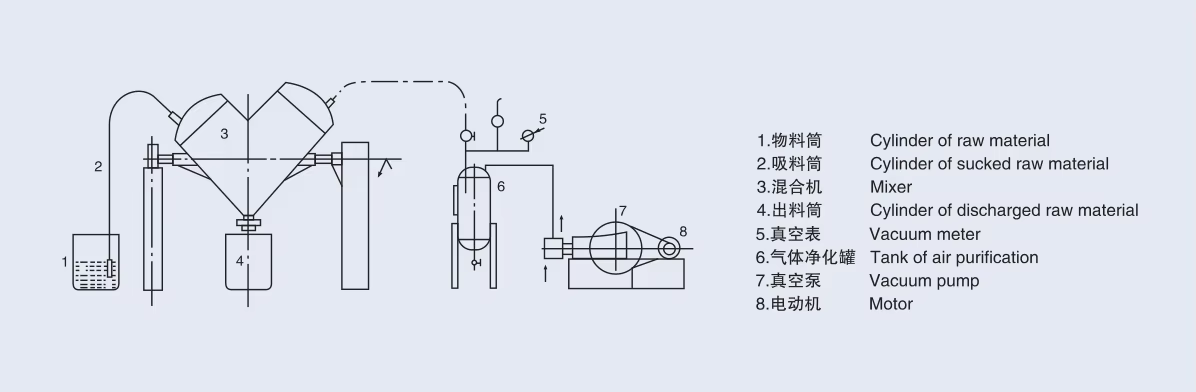
Fordern Sie eine Reinigungsmethode an, Prüfpunktzeichnung, Spezifikation des Kontaktmaterials, und Umstellungsverfahren, bevor Sie eine Bestellung aufgeben. Ein maßgeschneiderter quadratischer Kegelmischer, V-Mischer, oder Doppelkonusmischer sollten je nach Pulververhalten und Reinigungsrisiko ausgewählt werden, nicht nur dem Namen nach.
Chargen- oder kontinuierliches Mischen: Praktische Beschaffungstabelle
| Entscheidungsfaktor | Chargenmischen | Kontinuierliches Mischen |
|---|---|---|
| Rezeptänderungen | Klare Chargengrenzen und flexible Planung | Am besten mit stabilen Rezepten und kontrollierten Übergängen |
| Qualitätsfreigabe | Eine definierte Menge prüfen und freigeben | Überwachen Sie den Feed, mischen, und kontinuierlich entladen |
| Materialhandhabung | Möglicherweise ist eine Zwischenübertragung oder -lagerung erforderlich | Kann die Zwischenhandhabung reduzieren |
| Hauptrisiko | Arbeits- und Umrüstzeit | Instabilität und Segregation der Dosierung |
| Bester Beweis | Chargengleichmäßigkeit und Reinigungsvalidierung | Massenflussstabilität und stationäre Gleichmäßigkeit |
Checkliste für Lieferantenaudits: 5 Vor der Unterzeichnung einer Bestellung anzufordernde Dokumente
- Materialcharakterisierungsbericht zur Dichte, Partikelgröße, Feuchtigkeit, und Fließfähigkeit.
- Prüfprotokoll zur Mischungsgleichmäßigkeit mit Probenahmeorten und Akzeptanzgrenzen.
- Dokumentation der Feeder-Kalibrierung und Massenflusskontrolle für den ausgewählten Modus.
- Reinigung, Umstellung, Inspektion, und Rest-Hold-up-Spezifikation.
- Muster eines Inspektionsberichts vor dem Versand und Zeitplan für die Inbetriebnahmeunterstützung.
Häufig gestellte Fragen
Q: Ist das Batch-Mischen genauer als das kontinuierliche Mischen?? Keine der beiden Methoden ist automatisch genauer. Die Genauigkeit hängt von der Kalibrierung des Feeders ab, Rezeptsteuerung, Mischerdesign, Probenahme, und die akzeptable Variation für das Produkt. JSCSTECH empfiehlt, vor der Auswahl der Ausrüstung das Ziel für die Gleichmäßigkeit der Mischung zu definieren und das tatsächliche Pulver zu testen.
Q: Wann ist kontinuierliches Mischen die bessere Wahl?? Kontinuierliches Mischen wird oft in Betracht gezogen, wenn die Futtereigenschaften und die Rezeptur stabil sind und der nachgeschaltete Prozess einen stabilen Betrieb erfordert. Fragen Sie nach einer Massenfluss- und Kontrollstrategie, bevor Sie den Entwurf genehmigen.
Q: Kann ein Mischer sowohl die Chargen- als auch die kontinuierliche Produktion bewältigen?? Ein Mixer kann anpassungsfähig sein, aber füttern, Entladung, Kontrollen, Reinigung, und Sampling müssen den gewählten Modus ebenfalls unterstützen. Unser maßgeschneidertes Design prüft den kompletten Materialweg.
Für eine materialbasierte Empfehlung, Entdecken Sie unsere industrielle Mischausrüstung und überprüfen Sie die Leitfaden zur Konstruktionsberechnung eines Sprühtrockners wenn der Prozess Trocknen und Mischen kombiniert. Teilen Sie Ihr Rezept, Zieldurchsatz, und Reinigungsanforderungen, sodass unsere Ingenieure eine geeignete Konfiguration empfehlen können.
Hintergrundinformationen zur gestaffelten Chargenproduktion und nachgelagerten Lieferung, konsultieren Sie die Anleitung zum Tetra Pak-Mischer. Kontaktieren Sie Leta über WhatsApp mit Ihrem Rezept und Zieldurchsatz, damit unsere Ingenieure ein technisches Schema erstellen können.
Für eine Forschungsreferenz zum kontinuierlichen Mischen, siehe die aktueller Forschungsüberblick zum kontinuierlichen Mischen. Vergleichen Sie die veröffentlichten Leitlinien mit Ihren eigenen Futtereigenschaften und Betriebsgrenzen, bevor Sie eine Maschinenspezifikation genehmigen.