喷雾干燥机与转筒干燥机: 哪种最适合您的材料?
When you’re planning a new powder processing line, one of the most critical decisions you’ll make is choosing the right drying technology. For many materials, the choice comes down to two popular options: spray dryers vs rotary drum dryers. Both work well for industrial drying-but they’re designed for completely different types of materials and production goals.
Pick the wrong one, and you could end up with higher energy costs, poorer product quality, or even a dryer that can’t handle your feedstock at all. Let’s break down the key differences, typical applications, and how to choose.
What Is a Spray Dryer and When Should You Use It?
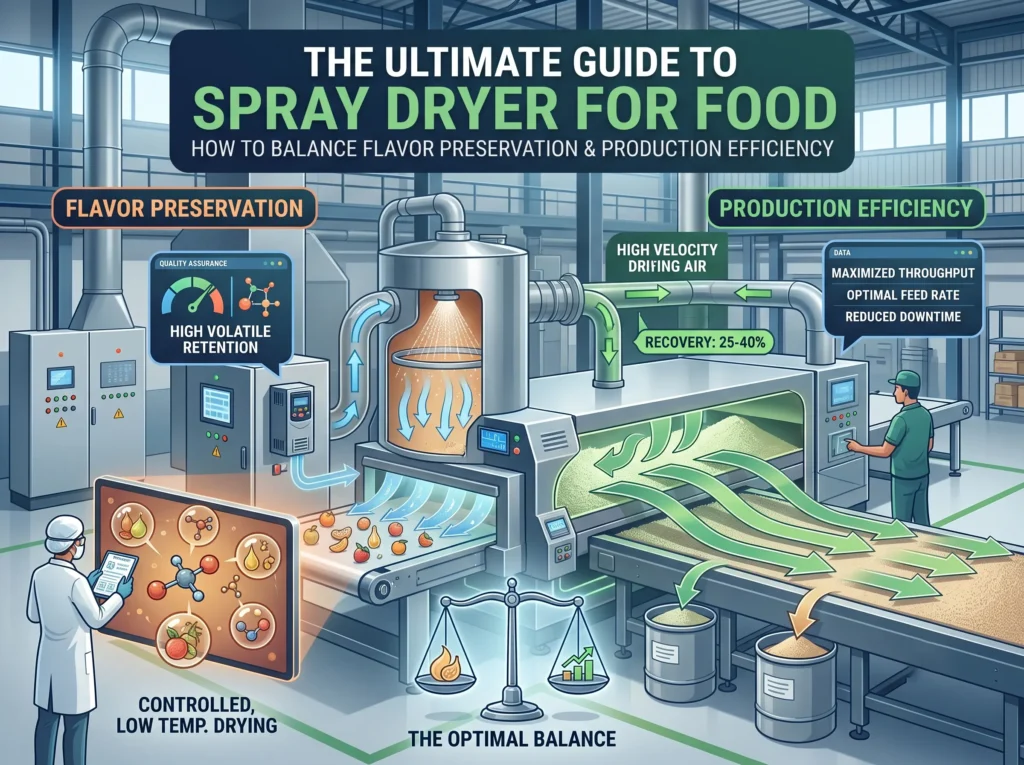
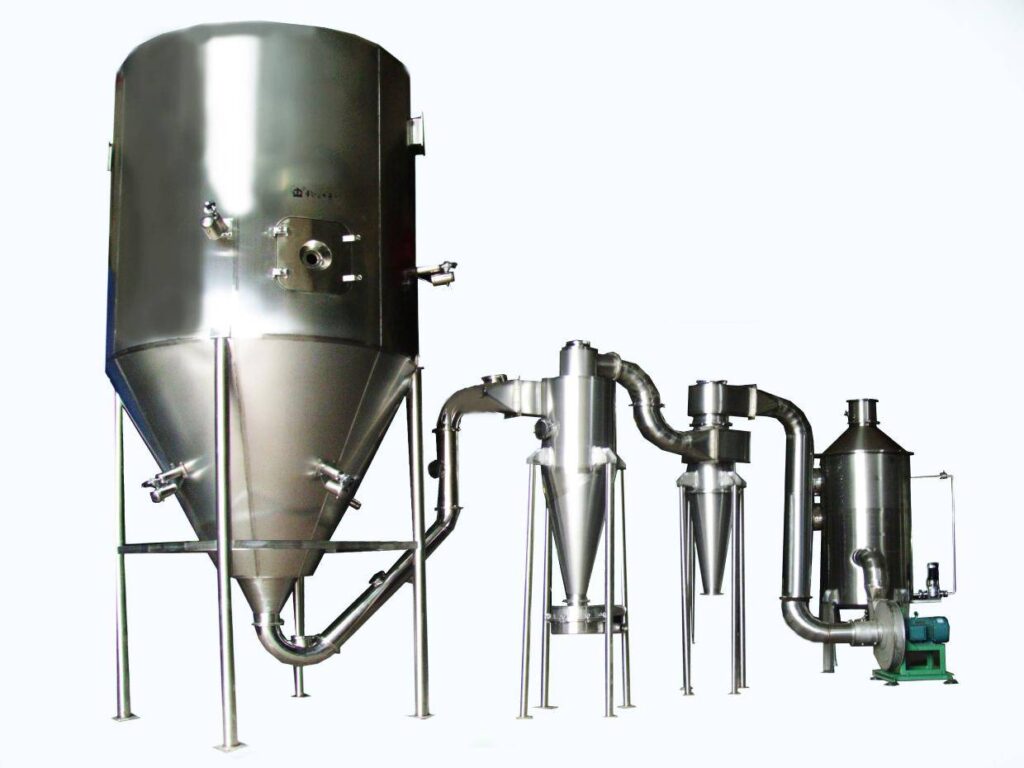
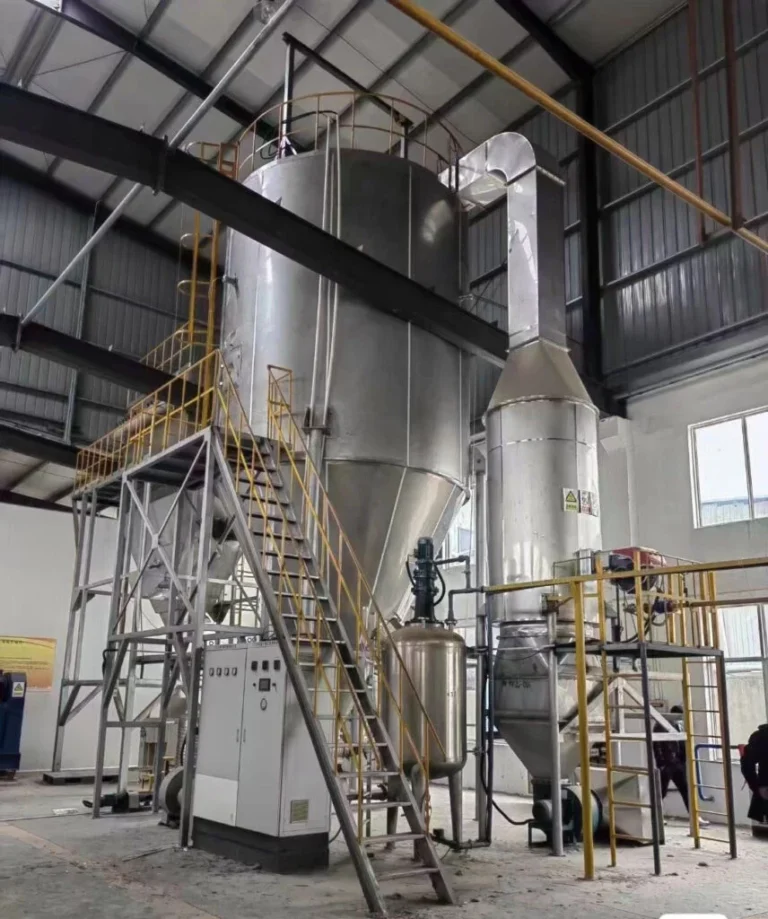
A spray dryer atomizes your liquid feed into fine droplets, then blows hot air through the spray to rapidly evaporate the moisture. This produces a free-flowing powder directly from the liquid feed in one continuous step.
Best applications for spray dryers:
- 奶粉及乳制品
- 速溶咖啡和茶
- Pharmaceutical API and herbal extracts
- Food flavorings and colorings
- Fine chemical powders that need controlled particle size
The biggest advantage of spray drying is that it produces a ready-to-use powder in one step, with excellent control over particle size distribution and moisture content. It’s also gentler than rotary drying for heat-sensitive materials when properly configured.
What Is a Rotary Drum Dryer and When Should You Use It?
A rotary drum dryer (or rotary dryer) is a rotating cylindrical drum that slowly tumbles your wet material as hot air passes through it. The continuous tumbling action provides consistent heat transfer, making it ideal for higher viscosity and wet cake materials that can’t be atomized.
Best applications for rotary drum dryers:
- High viscosity pastes (yeast, 淀粉, 木薯)
- Filter cakes and sludge
- Mineral sand, ore, and aggregates
- Large particle size organic materials
- Biomass and wood chips
Rotary drum dryers handle higher viscosity materials that simply can’t be pumped and atomized for spray drying. They’re also generally more robust for heavy-duty continuous production of larger particle sizes.
Key Comparison: 喷雾干燥机与转筒干燥机
| 因素 | 喷雾干燥机 | 转筒干燥机 |
|---|---|---|
| Feed type | Pumpable liquid / 泥浆 | Wet cake / high viscosity paste / 颗粒 |
| Product form | Free-flowing fine powder | Coarser granules / flakes |
| Particle size control | 出色的 | 好的 |
| 能源效率 | 适合细粉 | Excellent for high solids feed |
| 吞吐量 | 连续的, medium to high | 连续的, very high |
How to Choose Between Them for Your Process
Ask yourself these questions to make the right choice:
- What’s your feed form? If you can pump it as a liquid/slurry and you need a fine powder ? 喷雾干燥机. If it’s a wet cake or high viscosity paste that can’t be atomized ? 转筒干燥机.
- What particle size do you need? If you need a consistent fine powder for instant dissolution ? 喷雾干燥机. If you have larger particles or don’t need fine powder ? 转筒干燥机.
- What’s your throughput? Both handle high volume, but rotary dryers can handle larger masses of wet solids when you already have filtered cake.
Still Not Sure? We Can Help
At Jiangsu Changshi Drying Technology, we understand that choosing the right drying equipment is a big decision-getting it wrong costs time and money. That’s why we offer:
- ? Free material testing: Test your actual material in our test facility to confirm which dryer works best
- ? 100% custom engineered: We size and design the dryer specifically for your material, 水分含量, 和生产能力
- ? Energy optimization: We integrate heat recovery where possible to cut your long-term operating costs
- ? Fast quotations and on-time delivery: We know your project timeline matters, and we deliver on schedule
If you’re still unsure which drying solution is right for your product, contact our engineering team 今天. We’ll help you evaluate your options and get the right dryer for your process.
This guide helps procurement managers and process engineers understand the differences between spray dryers and rotary drum dryers to make the right decision for their powder processing plant.