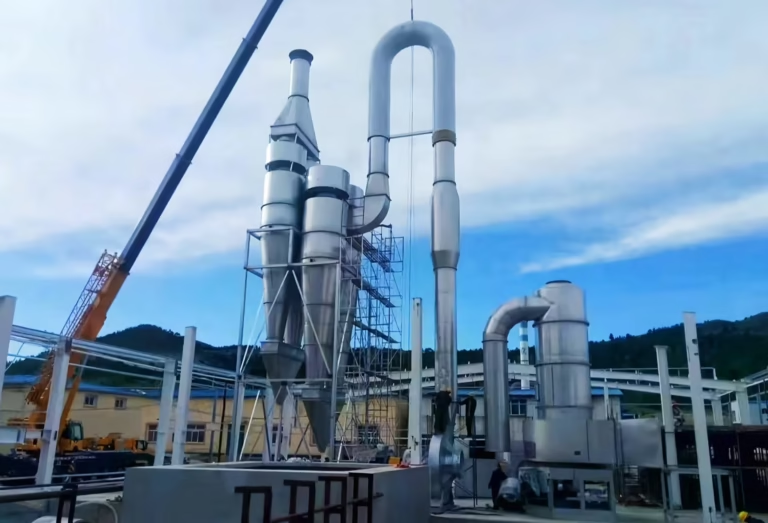
7 Clear Steps: Working Principle of Industrial Flash Dryer
7 Clear Steps: Working Principle of Industrial Flash Dryer
When a wet powder leaves filtration with a sticky surface or uneven moisture, a conventional dryer can create long residence times and difficult cleanup. The working principle of industrial flash dryer systems addresses this by dispersing wet feed into a fast-moving hot-air stream. We use material testing to determine whether that short-contact process fits the feed before recommending a plant-scale design.
How does the working principle of industrial flash dryer equipment begin with feeding?
The process starts with a controlled feeder that introduces wet material into the drying air without creating large lumps. A screw, rotary valve, or other feed arrangement may be suitable depending on moisture, stickiness, and particle size when applying the working principle of industrial flash dryer equipment. The feeder must create a stable material rate because fluctuations change outlet moisture and energy demand.
At JSCSTECH, we review the upstream filter, mixer, or granulator as part of the drying scheme. This prevents the dryer from being blamed for a feed problem that began before the material entered the air stream.
How does dispersion increase the drying rate?
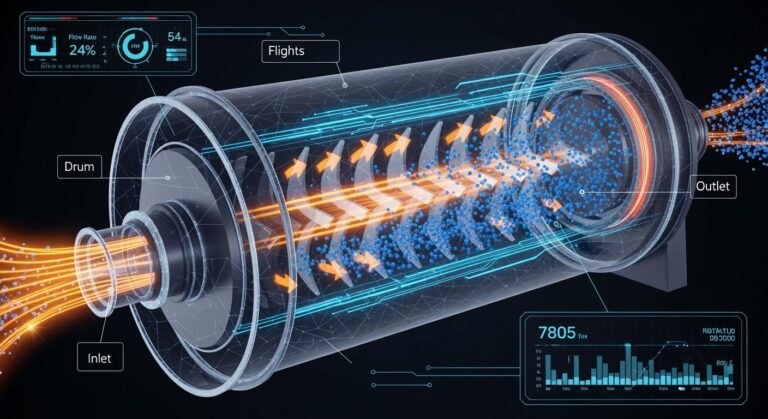
A flash dryer breaks or disperses wet material so more surface area contacts the hot gas. Smaller exposed particles transfer moisture faster than a compact cake. The working principle of industrial flash dryer systems therefore depends on both the disperser geometry and the material’s ability to separate under airflow.
The practical test of the working principle of industrial flash dryer equipment is not simply whether the feed enters the machine. Measure whether the material remains suspended, whether outlet moisture is stable, and whether the final powder contains oversized wet agglomerates.

What role do hot-air temperature and airflow play?
Hot air supplies the sensible heat needed to evaporate surface moisture while airflow transports particles through the drying duct. Higher temperature is not automatically better because heat-sensitive products can lose quality or change color. The correct operating window for the working principle of industrial flash dryer equipment balances inlet temperature, outlet temperature, air velocity, and final moisture.
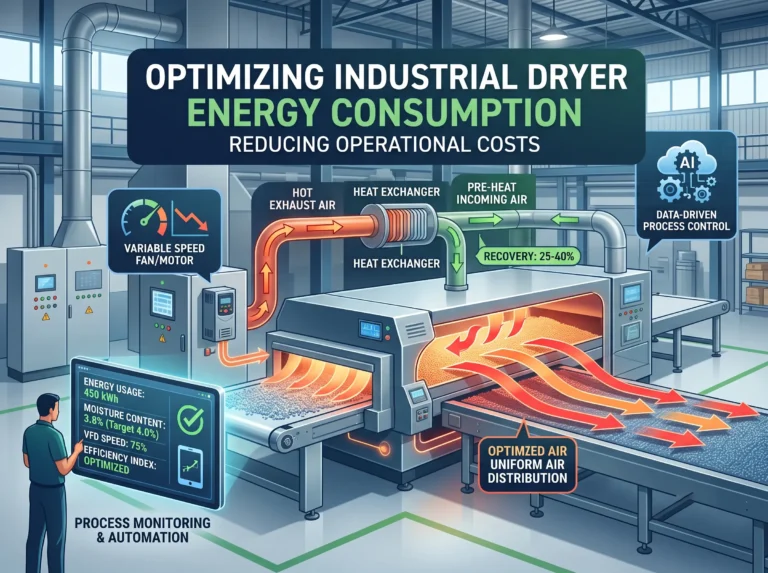
We recommend defining the airflow and thermal basis before equipment sizing. A high-efficiency heat exchanger and optimized thermal cycle can reduce operating costs, but only when exhaust humidity and product specification are measured.
How are dry particles separated from exhaust air?
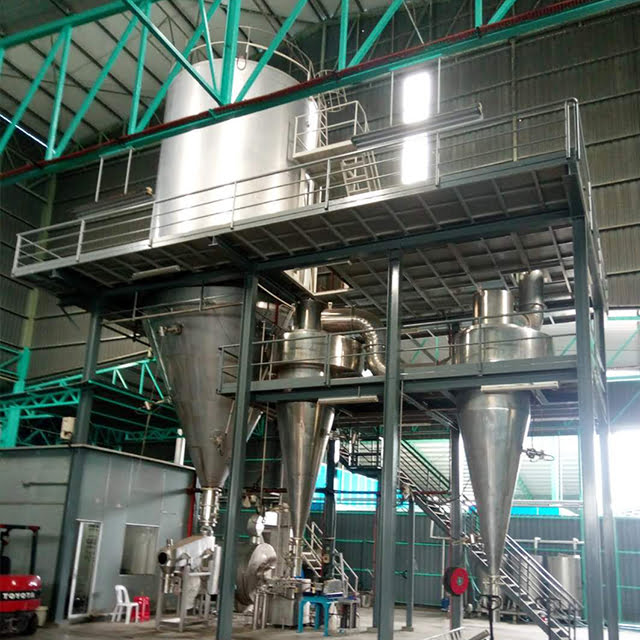
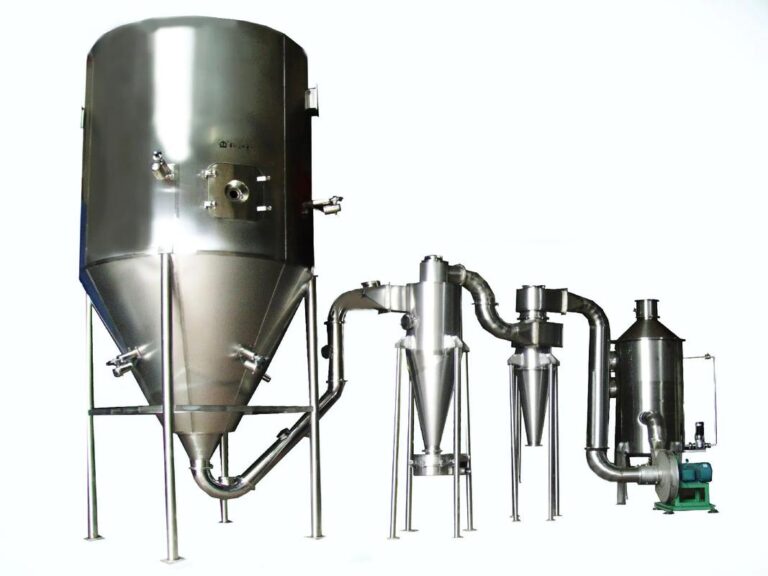
After moisture is removed, the gas-solid stream enters a separation stage such as a cyclone, bag filter, or combination system. The selection depends on particle size, recovery target, dust properties, and emissions requirements. Pressure drop must be considered because an oversized fan can increase electrical consumption.
For pharmaceutical, food, chemical, or mineral powders, ask the supplier to explain the recovery path and cleaning access. A complete design should identify where product loss, filter loading, and dust exposure could occur.
When is flash drying a better choice than spray drying or fluid bed drying?
Flash drying is usually considered for wet particulate or dispersed feed where rapid pneumatic transport is practical. Spray drying is more appropriate when a liquid feed must be atomized into a controlled powder. Fluid bed drying is often considered for free-flowing granules that need controlled bed contact.
The decision about the working principle of industrial flash dryer equipment depends on feed form, target particle size, heat sensitivity, throughput, and cleaning requirements. Our engineers compare these variables during the free material-test stage rather than forcing every application into the same dryer type.
Supplier Audit Checklist: 5 Documents to Request Before Signing a Purchase Order
- “
- Feed characterization report covering moisture, particle size, density, and stickiness.
- Airflow and residence-time calculation showing the basis for rapid drying.
- Heat balance with inlet/outlet temperatures and specific energy assumptions.
- Dust-collection and powder-recovery specification with pressure-drop basis.
- Material test report and pre-shipment inspection plan for the configured system.
Frequently Asked Questions
Q: What materials can an industrial flash dryer process? Flash drying can suit wet particulate, filter-cake, paste-like, or dispersed feed that can be transported in the gas stream. JSCSTECH checks the actual material before recommending a configuration.
Q: Why is flash drying fast? Rapid dispersion, pneumatic conveying, and direct hot-air contact increase exposed surface area for moisture transfer. The supplier should still provide a residence-time basis for your material.
Q: Can flash drying save energy? It can reduce residence time for suitable feeds, but energy performance depends on water load, exhaust humidity, heat recovery, and final moisture. Compare the complete thermal cycle, not heater rating alone.
JSCSTECH applies the working principle of industrial flash dryer equipment through 100% made-to-measure technical schemes, material testing, free design consultation, and 24-hour technical response. Review our industrial drying equipment and the spray dryer design calculations guide when comparing process routes.
For another technical description of flash drying, see Allgaier flash-dryer process overview before approving a design. Use the reference as a starting point, then ask your supplier to validate airflow, residence time, moisture load, and powder recovery for your actual material.
Contact Leta via WhatsApp for a material-based flash-drying assessment. Share your feed moisture, particle size, target output, and heat sensitivity so our engineers can review the process route.