Giá máy sấy phun công nghiệp: Phân tích đầu tư vốn và ROI
Giá máy sấy phun công nghiệp
Đối với các nhà máy sản xuất công nghiệp, mở rộng năng lực sản xuất hoặc cập nhật cơ sở hạ tầng xử lý hóa chất đòi hỏi phải có sự kiểm tra tài chính chặt chẽ. Mua một máy sấy phun công nghiệp hạng nặng là một khoản đầu tư đáng kể (VỐN) ảnh hưởng lớn đến chi phí hoạt động dài hạn của nhà máy (MỞ), hiệu suất nhiệt, và tổng lợi nhuận ròng.
Khi đánh giá giá máy sấy phun công nghiệp, Chỉ nhìn vào báo giá máy móc ban đầu là một sai lầm phổ biến. Chi phí phần cứng ban đầu thấp có thể dễ dàng che giấu những chi phí tiềm ẩn lớn về sau, chẳng hạn như tiêu thụ năng lượng quá mức, thời gian ngừng hoạt động cơ học thường xuyên, và ô nhiễm chéo vật liệu đắt tiền. Hướng dẫn này cung cấp thông tin chi tiết về các biến số kỹ thuật và tài chính chi phối việc đầu tư sấy phun, giúp các ủy ban mua sắm thực hiện việc hỗ trợ dữ liệu, quyết định mua hàng có ROI cao.
Giải mã tổng chi phí sở hữu (TCO)
Hồ sơ tài chính hoàn chỉnh của dây chuyền xử lý bột tự động được chia thành hai loại chính:
[Total Cost of Ownership (TCO)]
       │
       ├─► CAPEX (Custom Machine Engineering, Premium Metallurgy, Automation, Commissioning)
       │
       └─► OPEX (Thermal Utilities, Labor Overhead, Preventative Maintenance, Wear Parts)
- VỐN (Chi tiêu vốn): Bao gồm chi phí chế tạo phần cứng thô, tùy chỉnh hệ thống, nâng cấp luyện kim (ví dụ., chuyển từ SUS304 sang SUS316L), cấu hình điều khiển tự động (PLC/SCADA), chứng nhận tuân thủ quốc tế, và đóng gói vận chuyển.
- MỞ (Chi phí hoạt động): Bao gồm mức tiêu thụ tiện ích liên tục (điện, khí tự nhiên, hơi nước), chi phí lao động, chu trình làm sạch, và việc thay thế định kỳ các bộ phận có độ mài mòn cao như vòi phun nguyên tử hoặc đĩa quay.
Các biến số kỹ thuật cốt lõi chi phối giá máy
Máy sấy phun công nghiệp không bao giờ là hàng hóa chung chung; nó là một hệ thống nhiệt động lực chuyên môn cao. Sự chênh lệch về giá giữa các hệ thống được điều khiển bởi các yêu cầu kỹ thuật cụ thể:
1. Khả năng bay hơi nước và quy mô kết cấu
Máy sấy phun được định giá dựa trên tốc độ bay hơi nước hàng giờ của chúng ($\chữ{kg/giờ}$ nước bị loại bỏ), không phải trọng lượng của bột thành phẩm. A system engineered for an inlet capacity of $50\text{ kg/giờ}$ đòi hỏi dấu chân cấu trúc rất khác nhau, gia cố kết cấu, công suất quạt, và các bộ phận làm nóng so với tháp sấy công nghiệp nặng nhiều tấn. Khi sự bốc hơi đòi hỏi quy mô, kích thước vật lý của buồng sấy bằng thép không gỉ tăng theo cấp số nhân, ảnh hưởng đến chi phí nguyên vật liệu.
2. Thông số kỹ thuật luyện kim và xử lý bề mặt
Việc lựa chọn nguyên liệu thô phản ánh trực tiếp giá cuối cùng. Các ứng dụng hóa chất công nghiệp tiêu chuẩn có thể chỉ cần thép không gỉ SUS304. Tuy nhiên, nhà máy lọc nguyên liệu pin (yêu cầu ô nhiễm sắt bằng không) hoặc các nhà máy dược phẩm tiên tiến (tuân thủ nghiêm ngặt Tiêu chuẩn chứng nhận GMP) nhu cầu thép không gỉ SUS316L cao cấp. Hơn nữa, yêu cầu đánh bóng gương có độ bóng cao (internal roughness $\text{Ra} < 0.4\ \mu\text{tôi}$) hoặc lớp phủ fluoropolymer chống ăn mòn chuyên dụng (PTFE/PFA) đòi hỏi nhiều lao động chân tay, thêm vào chi phí cơ bản ban đầu.
3. Lựa chọn nguyên tử hóa và tự động hóa hệ thống
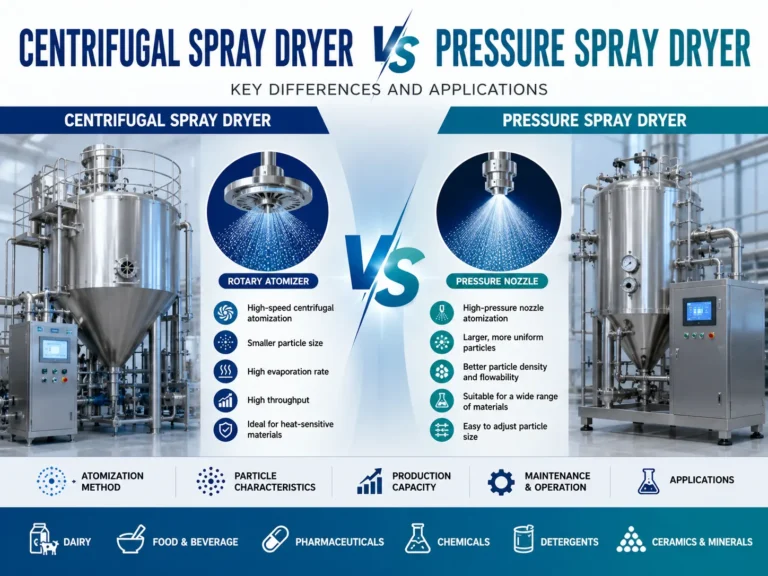
Sự lựa chọn giữa máy phun quay ly tâm tốc độ cao và hệ thống áp suất đa vòi phun chính xác sẽ tác động đến chi phí kỹ thuật. Ngoài ra, nâng cấp từ các vòng điều khiển tương tự thủ công lên hệ thống PLC Siemens hoặc Allen-Bradley tích hợp đầy đủ với tính năng Làm sạch tại chỗ tự động (CIP) hệ thống tăng CAPEX ban đầu, nhưng giảm đáng kể chi phí lao động dài hạn và rủi ro lỗi của con người.
Tối đa hóa ROI của dây chuyền xử lý nhiệt của bạn
Để bù đắp CAPEX ban đầu cao hơn, một hệ thống công nghiệp phải mang lại hiệu suất nhiệt vượt trội và thời gian ngừng hoạt động tối thiểu. Tại Công ty TNHH Công nghệ sấy Giang Tô Changshi, Công ty TNHH, chúng tôi kết hợp lại 20 năm kinh nghiệm kỹ thuật tùy chỉnh (với các bộ phận chuyên môn chọn lọc dựa trên 30+ năm kinh nghiệm sản xuất) để xây dựng các hệ thống bột hiệu quả cao được thiết kế để đạt ROI nhanh chóng. Hoạt động từ cơ sở sản xuất hiện đại rộng 10.000㎡ của chúng tôi, của chúng tôi 20+ thành viên nhóm kỹ thuật cao cấp thiết kế thiết bị tùy chỉnh cho khách hàng trên toàn thế giới, trong đó có hàng chục Fortune 500 doanh nghiệp.
[Raw Stock Parameters] ➔ [Precision Material Testing] ➔ [Thermal Balance Optimization] ➔ [High-ROI Continuous Output]
Chúng tôi thiết kế hệ thống của mình để tối ưu hóa lợi nhuận hoạt động lâu dài thông qua một số tính năng thiết kế chính:
- Kết hợp cân bằng nhiệt tùy chỉnh: Chúng tôi thực hiện kết hợp quy trình nghiêm ngặt và thử nghiệm vật liệu trên nguyên liệu cụ thể của bạn trước khi chế tạo. Điều này đảm bảo rằng các bộ xử lý không khí và đầu đốt có kích thước chính xác theo đặc tính bay hơi của vật liệu của bạn, loại bỏ chất thải nhiên liệu và giảm chi phí năng lượng.
- Giảm chu kỳ mài mòn và bảo trì: Bằng cách tích hợp các thành phần cao cấp và bộ phun cân bằng chính xác, máy móc của chúng tôi đạt được vòng đời hoạt động lâu dài với mức độ hao mòn các bộ phận ở mức tối thiểu. Điều này trực tiếp làm giảm chi phí bảo trì định kỳ và thời gian ngừng hoạt động ngoài dự kiến của nhà máy.
- Kỹ thuật chìa khóa trao tay & Hậu cần tuân thủ: Chúng tôi quản lý toàn bộ vòng đời dự án của bạn—từ thiết kế máy tùy chỉnh và điều chỉnh điện áp (ví dụ., 380V/440V) đến thùng kết cấu hàng hải và toàn diện 7*24 giờ hỗ trợ kỹ thuật trực tuyến. Điều này giúp cho tiến trình lắp đặt nhà máy của bạn diễn ra nhanh chóng và tránh được các khoản phí nhà thầu ẩn.
Câu hỏi thường gặp: Làm rõ kỹ thuật có mục đích cao
Q1: Tại sao máy sấy phun được thiết kế theo yêu cầu lại mang lại ROI dài hạn tốt hơn hệ thống có sẵn?
Một hệ thống có sẵn được xây dựng cho các ứng xử vật liệu trung bình. Nếu nguyên liệu của bạn hơi dính, nhạy nhiệt hơn, hoặc có tính mài mòn cao, một hệ thống chung có thể bị dính tường mãn tính, sự thiêu đốt của sản phẩm, hoặc vòi phun bị mòn sớm. Điều này dẫn đến việc ngừng làm sạch thường xuyên và tỷ lệ phế liệu cao.. Một hệ thống được thiết kế theo yêu cầu của Jiangsu Changshi Technology phù hợp với các thông số sản phẩm cụ thể của bạn, đảm bảo năng suất ổn định, chất thải thấp hơn, và thời gian hoàn vốn nhanh.
Q2: Lựa chọn tiện ích như thế nào (khí đốt, hơi nước, điện) ảnh hưởng đến chi phí vận hành của máy sấy phun?
Nguồn sưởi ấm là thành phần chính của OPEX của hệ thống. Sưởi ấm bằng điện có chi phí thiết lập ban đầu thấp (VỐN) nhưng có thể mang lại chi phí vận hành cao ở những khu vực có điện đắt tiền. Đầu đốt bằng khí đốt tự nhiên hoặc đốt dầu nhiên liệu trực tiếp yêu cầu đầu tư thiết bị ban đầu cao hơn nhưng mang lại chi phí vận hành trên mỗi đơn vị nhiệt thấp hơn đáng kể cho các hệ thống lớn. Nhóm kỹ thuật của chúng tôi tính toán ma trận chi phí tiện ích địa phương trong giai đoạn thiết kế để đề xuất nguồn nhiệt tối ưu cho cơ sở của bạn.
Q3: Những tài liệu và hỗ trợ nào được cung cấp để đảm bảo quá trình cài đặt quốc tế liền mạch?
Chúng tôi cung cấp gói tài liệu kỹ thuật đầy đủ, bao gồm sơ đồ bố trí cơ khí hoàn chỉnh, P&Sơ đồ chất lỏng ID, sơ đồ thiết bị đầu cuối điện, và hướng dẫn vận hành chi tiết được tùy chỉnh cho mẫu máy cụ thể của bạn. Để hỗ trợ người mua toàn cầu, bộ phận kỹ thuật quốc tế của chúng tôi cung cấp 7*24 giờ hỗ trợ kỹ thuật trực tuyến để hướng dẫn các nhóm lắp đặt địa phương trong quá trình vận hành thử, thử nghiệm, và giới thiệu nhà điều hành.
Tối ưu hóa việc phân bổ vốn sản xuất của bạn
Lựa chọn máy sấy phun công nghiệp đòi hỏi phải đánh giá cả chi phí ban đầu và hiệu quả sản xuất lâu dài. Hợp tác với một nhà sản xuất bán hàng trực tiếp có uy tín đảm bảo chi tiêu vốn của bạn chuyển trực tiếp thành độ tinh khiết cao, sản lượng bột có thể dự đoán được.
Liên hệ với văn phòng dự án quốc tế tại Công ty TNHH công nghệ sấy Giang Tô Changshi, Công ty TNHH. ngay hôm nay để đảm bảo danh mục thiết bị mới nhất của chúng tôi hoặc lên lịch đánh giá quy trình. Hãy để chúng tôi 20+ các kỹ sư cấp cao phân tích mục tiêu thông lượng của bạn và thiết kế một tùy chỉnh, giải pháp sấy phun tiết kiệm năng lượng được tối ưu hóa cho mục tiêu hiệu suất và ngân sách doanh nghiệp của bạn.