Princípio de funcionamento do secador raspador de tambor rotativo: Viscous Slurry Drying Guide
7 Verificações essenciais do princípio de funcionamento do secador raspador de tambor rotativo
Se uma alimentação viscosa formar uma camada espessa, bloqueia uma rota de descarga, ou seca de forma irregular, um simples secador de ar quente pode não corresponder ao material. O princípio de funcionamento do secador raspador de tambor rotativo combina uma superfície rotativa aquecida com formação controlada de filme e raspagem mecânica. Em nosso 20 anos de prática de fabricação, começamos com viscosidade, sólidos, sensibilidade ao calor, e a forma seca necessária.
Como o princípio de funcionamento do secador raspador de tambor rotativo controla uma alimentação viscosa?
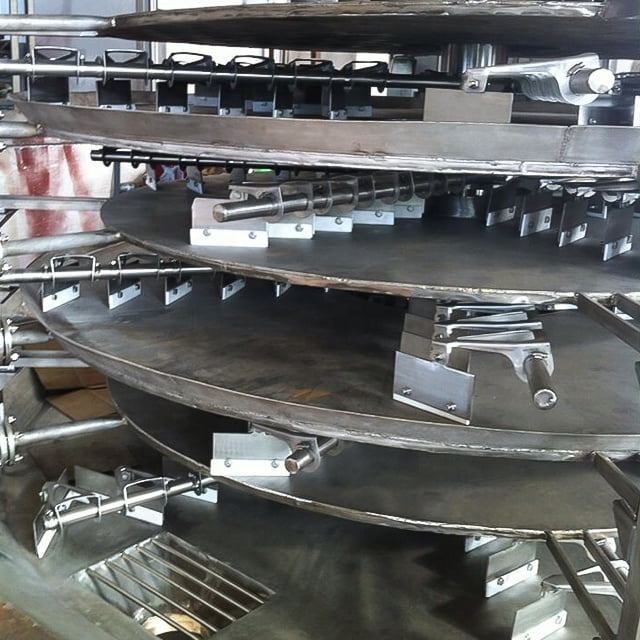
A alimentação entra em contato com um tambor rotativo aquecido e forma uma camada controlada na superfície. À medida que o tambor gira, o calor transfere através da parede do tambor e a umidade sai do material. Um raspador remove então o filme seco no ponto de descarga projetado.

A janela operacional útil depende da viscosidade da alimentação, concentração de sólidos, temperatura do tambor, tempo de residência, espessura do filme, e folga da lâmina. JSCSTECH usa testes de materiais para construir um esquema específico de processo em vez de assumir que cada produto pegajoso forma o mesmo filme.
Quais propriedades do material decidem se um tambor raspador é adequado?
Meça a viscosidade em toda a faixa de temperatura esperada, alimentar sólidos, umidade, sensibilidade ao calor, tendência de adesão, e a forma desejada de partícula ou floco. Levedura, amido, e outros produtos de alta viscosidade podem exigir diferentes superfícies de contato, arranjos de alimentação, e condições de raspagem.
O comprador também deve definir se o produto deve sair como um floco fino, grânulo, pó, ou folha seca quebrada. Esse requisito de saída altera a coleção downstream, resfriamento, esmagando, e design de embalagens.
Como a temperatura do tambor e o tempo de permanência afetam a qualidade do produto?
A temperatura mais alta do tambor pode aumentar a capacidade de evaporação, mas também pode escurecer, cozinhar, ou danificar material sensível ao calor. O tempo de residência é influenciado pela velocidade de rotação, espessura de alimentação, comprimento do tambor, e a forma como a camada seca é removida.
Solicite um balanço de calor e massa com a faixa de temperatura proposta e a meta de umidade. O custo do ciclo de vida completo deve incluir a eficiência térmica, tempo de limpeza, substituição da lâmina, risco de inatividade, e a energia necessária para qualquer etapa de redução de tamanho a jusante.
O que deve ser verificado no conjunto raspador e descarga?
Inspecione o material da lâmina, liberação de contato, método de ajuste, subsídio de desgaste, vedação, e acesso para limpeza. Uma lâmina muito agressiva pode danificar a superfície ou criar finos excessivos, enquanto a folga excessiva pode deixar material molhado no tambor.
Nosso 100% design feito sob medida cobre o tambor, raspador, alimentar, descarga, e rota de coleta como um sistema. Isto reduz o risco de receber um tambor que funciona em princípio, mas não consegue manter a forma de produto exigida na produção diária.
Princípio de funcionamento do secador raspador de tambor rotativo: Tabela de Aquisições
| Fator de projeto | Por que isso importa | Provas a solicitar |
|---|---|---|
| Comportamento alimentar | Controla a formação e adesão do filme | Relatório de teste de viscosidade e material |
| Superfície do tambor | Determina a transferência de calor e limpeza | Material de superfície e base de temperatura |
| Montagem do raspador | Controla a remoção do filme e a forma do produto | Desenho de lâmina, liberação, plano de desgaste |
| Tempo de residência | Afeta a umidade final e a exposição ao calor | Balanço de calor/massa e faixa de velocidade |
Lista de verificação de auditoria de fornecedor: 5 Documentos a serem solicitados antes de assinar um pedido de compra
- Teste de material cobrindo viscosidade, sólidos, umidade, e sensibilidade ao calor.
- Balanço de calor e massa com base na temperatura do tambor e no tempo de residência.
- Superfície do tambor, lâmina raspadora, liberação, e especificação de desgaste.
- Limpeza, inspeção, e procedimento de substituição da lâmina.
- Amostra de relatório de inspeção pré-embarque e plano de comissionamento.
Perguntas frequentes
P: Qual material é adequado para um secador raspador de tambor rotativo? A máquina é considerada viscosa, tipo pasta, pegajoso, ou alimentos difíceis de manusear, como fermento e amido. JSCSTECH analisa o material real antes de selecionar a configuração do raspador.
P: Por que as lâminas raspadoras são importantes na secagem em tambor? As lâminas removem a camada seca do tambor e controlam a descarga do produto. Solicite o material da lâmina, liberação, subsídio de desgaste, e limpeza de acesso.
P: Como um comprador pode verificar uma proposta de secador raspador? Solicitar dados de teste de material, balanço de calor e massa, temperatura do tambor, especificação da lâmina, procedimento de limpeza, e evidências de inspeção pré-embarque.
Revise nosso equipamento de secagem industrial personalizado e o guia de cálculo de projeto de secador por spray ao comparar rotas térmicas para a mesma alimentação. Compartilhe sua viscosidade, sólidos, umidade, sensibilidade ao calor, e visar a forma seca para que nossos engenheiros possam comparar as opções de processo.
Para obter uma referência independente sobre pesquisa em tecnologia de secagem, consulte o Referência do secador de tambor ScienceDirect. Entre em contato com Leta via Whatsapp com as propriedades do seu feed e a forma seca desejada.