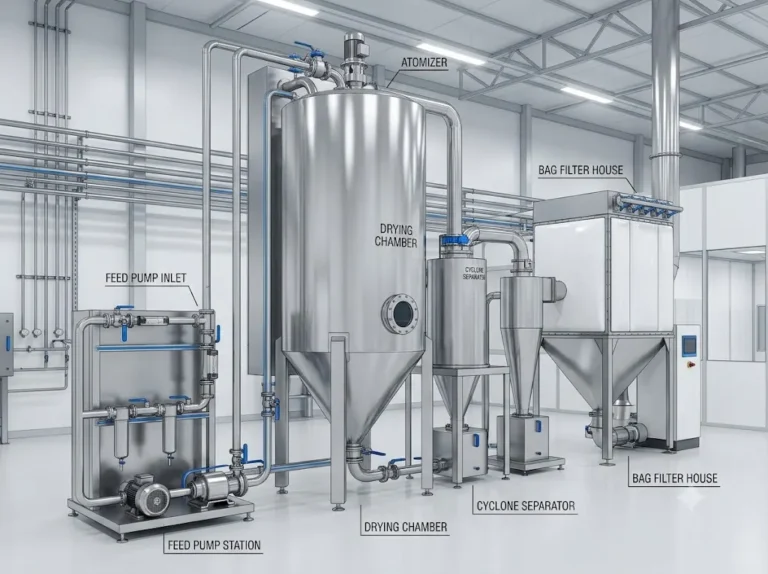
7 Soluciones prácticas para el pegado de paredes en secadores por aspersión para plantas de polvo
7 Soluciones prácticas para el pegado de paredes en secadores por aspersión para plantas de polvo
Si se acumula polvo en la pared del secador por aspersión, el depósito visible es sólo el síntoma final. La causa puede ser gotitas húmedas., una temperatura de transición vítrea baja, mala distribución del aire, sólidos de alimentación inadecuados, o una configuración de atomizador que crea una fracción de gran tamaño. Nuestras soluciones de adhesivo de pared para secadores por aspersión comienzan con los datos del material y del proceso., no es un aumento aleatorio de temperatura.
¿Cómo se identifica el mecanismo detrás de los depósitos en las paredes del secador por aspersión??
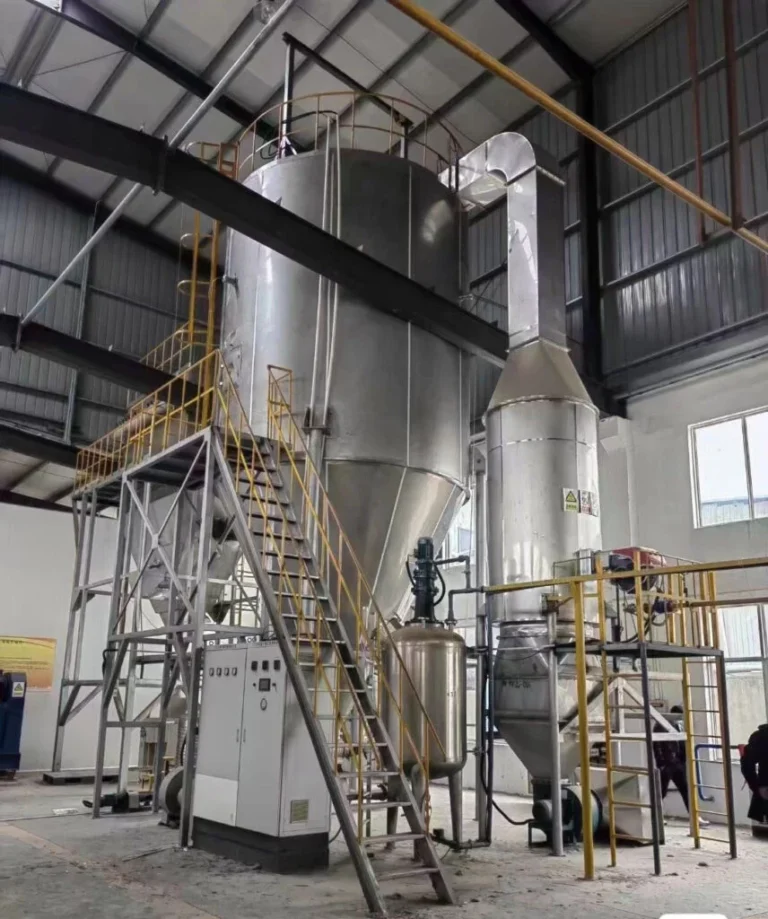
Primer registro donde aparece el depósito, qué tan rápido se construye, si está mojado o quebradizo, y si se forma cerca del atomizador, cono, salida de aire, o descarga del producto. La ubicación del depósito ayuda a distinguir el secado incompleto del flujo de aire deficiente, trayectoria de la gota, o adherencia del material.
Los lácteos y el suero en polvo pueden volverse pegajosos cuando el producto alcanza un rango de temperatura en el que sus sólidos amorfos se ablandan.. El tetra pak referencia de leche y suero en polvo explica por qué el comportamiento del producto y la temperatura deben evaluarse juntos al planificar soluciones de pegado de paredes para secadores por aspersión.
¿Qué propiedades del pienso se deben comprobar antes de cambiar el secador??
Medir los sólidos de alimentación, viscosidad, densidad, distribución del tamaño de partículas, comportamiento de transición vítrea cuando sea relevante, y la humedad de salida objetivo. Una alimentación baja en sólidos aumenta la carga de agua y puede dejar las gotas mojadas cuando llegan a la pared.. Una alimentación altamente viscosa también puede alterar la atomización y la formación de gotas..
En JSCSTECH, Se utilizan pruebas de materiales gratuitas para construir un esquema técnico específico del proceso.. El objetivo es conectar el comportamiento alimentario con un cambio controlado en la concentración., atomización, temperatura del aire, flujo de aire, o geometría de la cámara en lugar de tratar cada polvo como el mismo material.
¿Puede la concentración y la atomización del alimento reducir la adherencia??
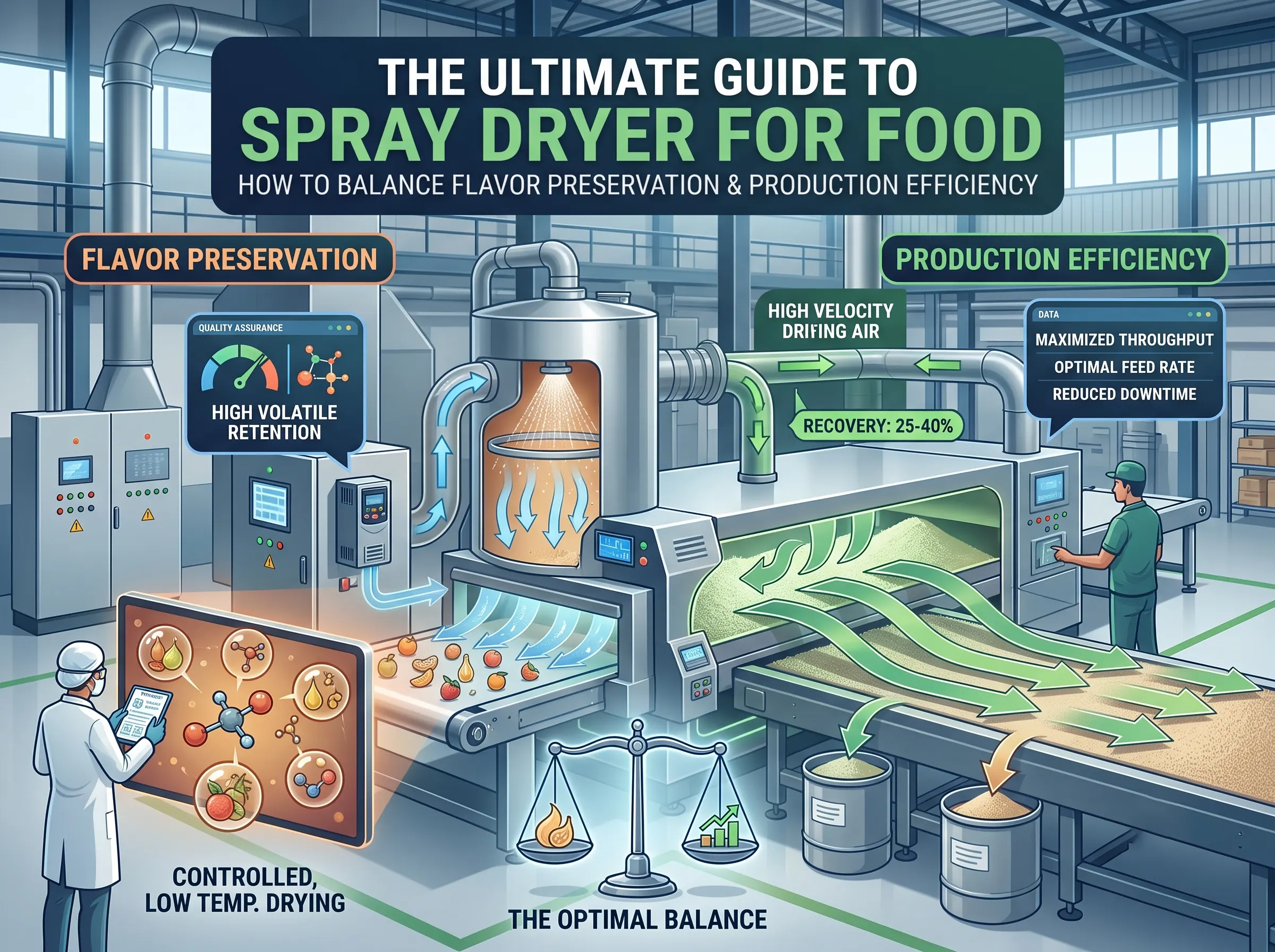
El aumento de los sólidos del alimento puede reducir la cantidad de agua que debe evaporarse., pero el alimento debe seguir siendo bombeable y atomizable. La selección del atomizador y la velocidad de funcionamiento influyen en el tamaño de la gota, tiempo de secado, densidad del polvo, y la probabilidad de que el material húmedo llegue a la pared.
Un plan práctico de soluciones para pegar la pared con secador por aspersión debe definir el rango de gotas objetivo., temperatura de alimentación, ajuste de boquilla o atomizador rotatorio, y humedad de salida permitida. Los cambios deben confirmarse mediante la recuperación del polvo., uniformidad de la humedad, e inspección de depósitos, no solo por la ausencia de un parche visible en la pared.
¿Cómo afectan la distribución del aire de entrada y la geometría de la cámara a los depósitos??
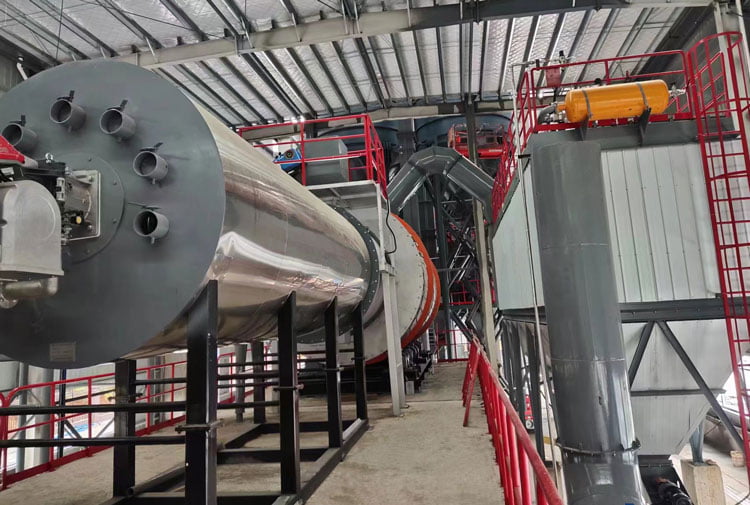
El patrón de aire debe transportar gotas a través de la zona de secado sin empujar el material húmedo directamente hacia la pared de la cámara.. Mala distribución, un dispersor de aire inadecuado, o una suposición incorrecta sobre el tiempo de residencia puede crear una zona húmeda local incluso cuando la temperatura promedio de salida parece aceptable.
Nuestros ingenieros revisan el volumen de aire., perfil de temperatura, dimensiones de la cámara, carga ciclónica, y descarga de polvo juntos. Este 100% El enfoque hecho a medida es especialmente importante cuando la misma línea debe manipular alimentos., farmacéutico, químico, o polvos minerales con diferente comportamiento de adhesión.
¿Qué controles operativos ayudan a prevenir depósitos recurrentes en las paredes??
Los operadores deben tener una tendencia en la velocidad de alimentación., sólidos de alimentación, temperatura de entrada, temperatura de salida, velocidad del atomizador o presión de la boquilla, humedad de escape, y humedad del producto. Un cambio en una variable puede mover el proceso fuera de la ventana de secado seguro. El registro de estos valores agiliza la resolución de problemas y reduce los ajustes repetidos de prueba y error..
Utilice el sistema de control para señalar el aumento de la humedad del escape., presión de alimentación inestable, o un cambio en la humedad de salida antes de que los depósitos se vuelvan severos. El diseño optimizado del ciclo térmico y los intercambiadores de calor de alta eficiencia también pueden reducir la presión de energía y al mismo tiempo mantener el proceso dentro de su ventana operativa específica del material..
Lista de verificación de auditoría de proveedores: 5 Documentos a solicitar antes de firmar una orden de compra
- Informe de prueba de material y curva de secado para la alimentación real.
- Especificación de atomización con base en el tamaño de la gota y rango operativo.
- Distribución de aire y cálculo del tiempo de residencia para la cámara propuesta..
- Procedimiento de limpieza-dibujo de acceso y retirada de depósitos.
- Muestra de informe de inspección previa al envío más plan de respuesta posventa y puesta en servicio.
Preguntas frecuentes
q: ¿Cuál es la primera causa a comprobar cuando el polvo se adhiere a la pared de un secador por aspersión?? Comience con un comportamiento de temperatura pegajosa, sólidos de alimentación, tamaño de gota, y humedad de salida. JSCSTECH utiliza pruebas de materiales y revisión de procesos antes de cambiar el diseño de la cámara.
q: ¿Puede el aumento de la temperatura de entrada solucionar el problema del pegado a la pared?? No siempre. Una temperatura de entrada más alta puede acelerar el secado de la superficie, pero puede dañar los productos sensibles al calor.. Comparar la entrada completa, salida, alimentar, atomización, y ventana de flujo de aire.
q: ¿Cómo puede un proveedor demostrar que un nuevo secador por aspersión reducirá la adherencia?? Solicite datos de prueba de materiales, resultados de la curva de secado, base de atomización, cálculos de flujo de aire o tiempo de residencia, y un diseño de acceso de limpieza vinculado al mecanismo de adherencia específico.
Explora nuestro gama de equipos de secado personalizados y leer el guía de mantenimiento de la boquilla del secador por aspersión antes de finalizar un plan de solución de problemas. JSCSTECH proporciona diseño de esquema técnico gratuito, pruebas de materiales, y soporte de respuesta las 24 horas.
Contacta con Leta a través de WhatsApp con sus propiedades de alimentación y fotografías de depósito para que nuestros ingenieros puedan revisar las soluciones más probables para el pegado de paredes de secadores por aspersión.. Incluir sólidos de alimentación, viscosidad, temperaturas de entrada y salida, ajustes del atomizador, y su intervalo de limpieza actual para una primera evaluación más útil.