Kontinuierlicher Trockner vs. Chargentrockner: Welches ist das Beste für die Produktion mit hoher Kapazität??
Kontinuierlicher Trockner vs. Chargentrockner
In der industriellen Pulververarbeitung, Die Wahl der thermischen Verarbeitungskonfiguration ist mit einem hohen Investitionsaufwand verbunden (Investitionsausgaben) Entscheidung, die die langfristige Rentabilität einer Anlage bestimmt, Energieprofil, und betriebliche Flexibilität. Bei der Vergrößerung einer Produktionsanlage – sei es für chemische Polymere, Massenzutaten für Lebensmittel, oder mineralische Zuschlagstoffe – Verfahrensingenieure und Beschaffungsausschüsse stehen unweigerlich vor einer grundlegenden Architekturdebatte: Kontinuierlicher Trockner vs. Chargentrockner.
Während die Stapelverarbeitung aufgrund ihrer unkomplizierten betrieblichen Isolation weiterhin tief in traditionellen Fertigungsstrukturen verwurzelt ist, Der moderne Marktdruck erfordert einen beispiellosen Durchsatz, geringerer CO2-Fußabdruck, und menschliches Versagen minimiert. Für Fertigungsbetriebe mit hoher Kapazität, Die Wahl zwischen einem automatisierten kontinuierlichen System und einem lokalisierten Batch-System erfordert eine strenge Bewertung der Thermodynamik, Materialrheologie, und Lebenszyklus-Return on Investment (ROI).
Entschlüsselung der Betriebstypologien
Um eine genaue technische Basislinie zu erstellen, Wir müssen definieren, wie diese beiden unterschiedlichen Systeme die Massen- und Wärmeübertragung im Laufe der Zeit steuern:
[Batch System]      ➔ Feed Input ➔ Sealed Thermal Cycle ➔ Complete System Discharge (Discontinuous Loop)
[Continuous System] ➔ Constant Controlled Inflow ➔ Dynamic Steady-State Drying ➔ Continuous Dry Yield
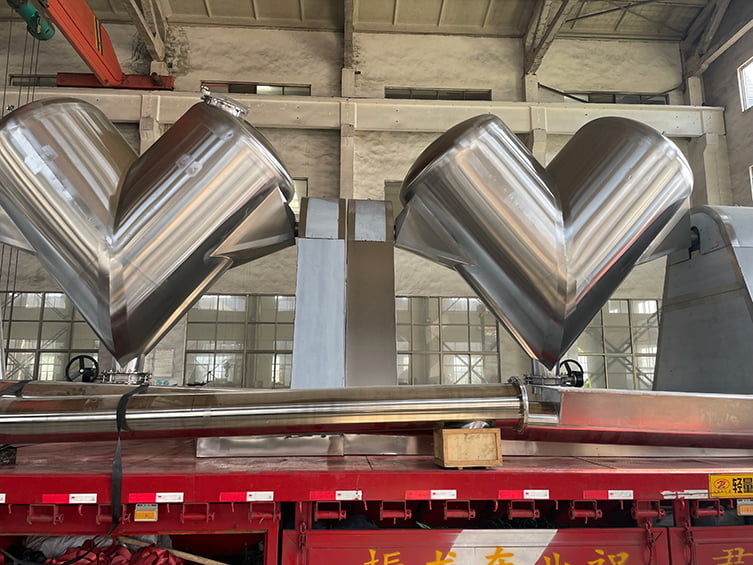
- Chargentrockner: Diskontinuierlich arbeiten, geschlossener Kreislauf. Eine feste Masse nassen Materials wird in eine Kammer geladen (B. ein Vakuumtablett oder ein Doppelkegelgefäß), über eine bestimmte Zeit-Temperatur-Kurve verarbeitet, und vollständig entladen, bevor der nächste Zyklus beginnen kann.
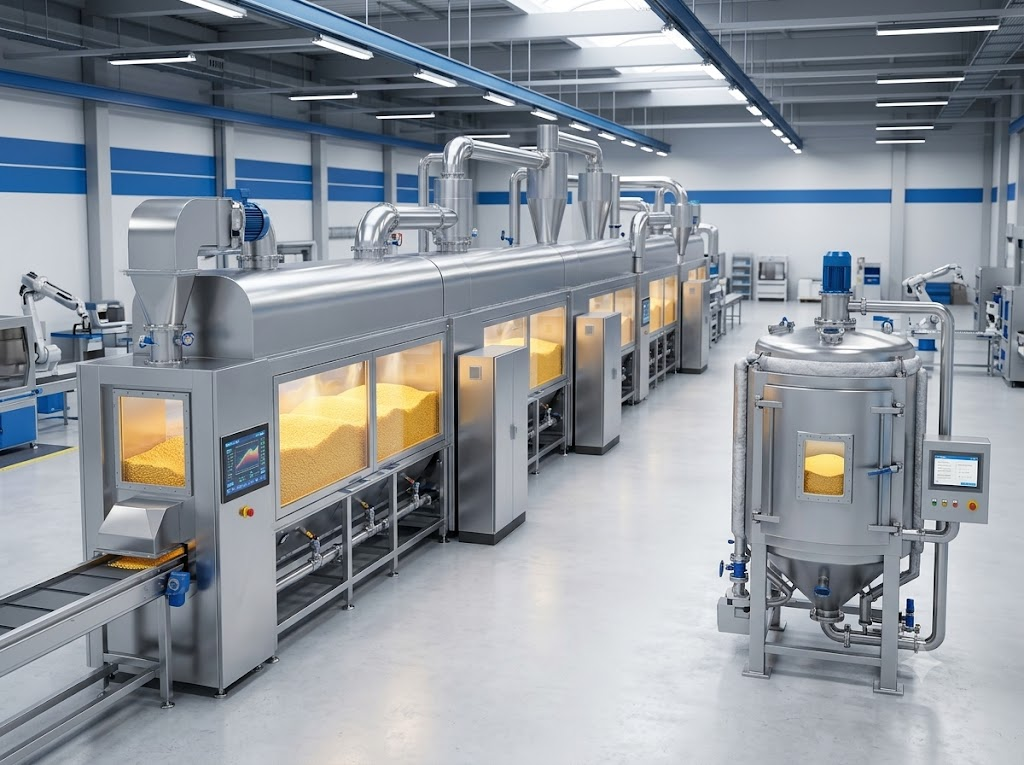
- Kontinuierliche Trockner: Bei einer offenen Stelle operieren, stationäre Schleife. Über automatisierte Dosiermechanismen gelangen ständig Stoffströme in das System, Reisen Sie durch kalibrierte thermische Zonen (über automatisierte Wirbelbetten, Netzgürtel, oder Blitzröhren), und als trockenes Pulver kontinuierlich austragen, ohne die vor- oder nachgeschalteten Maschinen anzuhalten.
Thermodynamische und betriebliche Head-to-Head-Bewertung
Für Anlagen mit hoher Kapazität, die einen Tagesertrag von mehreren Tonnen anstreben, Die Verarbeitungseffizienz muss anhand von vier verschiedenen betrieblichen Säulen analysiert werden:
1. Thermodynamische Effizienz und Energieverbrauch
Batch-Systeme leiden unter chronischen Temperaturwechselverlusten. In jeder einzelnen Batch-Schleife, die gesamte metallische Masse der Trockenkammer, Innenfächer, und strukturelle Stützen müssen vor der Produktabgabe von der Umgebungstemperatur erwärmt und anschließend abgekühlt werden. Dies führt zu massiven Strahlungswärmeverlusten und treibt die Betriebskosten pro Kilogramm fertigem Pulver in die Höhe.
Kontinuierliche Trockner, umgekehrt, unter konstantem Betrieb arbeiten stationäres thermisches Gleichgewicht. Sobald die Trockenkammer ihre optimale Betriebstemperatur erreicht hat, Der Wärmeeintrag dient ausschließlich der Verdunstung der Materialfeuchtigkeit. Das System behält eine unveränderliche bei, optimiertes Abluftprofil, drastische Reduzierung des Kraftstoff- oder Stromverbrauchs in Massenproduktionskonfigurationen.
2. Produkteinheitlichkeit und Qualitätskontrolle
In einem Batch-Setup, Material ist sehr anfällig für lokale thermische Schwankungen. Pulver, das in der Nähe der Wärmeleitmäntel oder Heißlufteinlässe ruht, kann leicht einer Überverarbeitung unterliegen, Verkohlung, oder kristalliner Abbau, während der Kern der Charge feucht bleibt. Dies führt zu deutlichen Inkonsistenzen zwischen den einzelnen Chargen.
Kontinuierliche Konfigurationen – insbesondere automatisierte Wirbelschicht- oder kontinuierliche Netzbandsysteme – stellen sicher, dass jedes einzelne Partikel identische Verweilzeiten erfährt und dem Trocknungsgeschwindigkeitsvektor gleichmäßig ausgesetzt ist, Es entsteht eine völlig homogene Partikelgrößenverteilung ($\Text{D50}$) und präzisen Feuchtigkeitsgehalt.
3. Arbeitskosten, Automatisierung, und Risiken menschlicher Fehler
Die Stapelverarbeitung ist sehr arbeitsintensiv. Es erfordert eine manuelle oder halbautomatische Materialbeladung, Schaben des Tabletts, Strukturelle Handhabung, und manuelle Reinigungszyklen. Jeder manuelle Berührungspunkt führt zu erheblichen Vektoren für Bedienerfehler, Materialverschüttung, und Kreuzkontamination.
Kontinuierliche Systeme integrieren sich nahtlos in vollautomatische Anlagenarchitekturen. Einsatz von Differenzialdosierern, Rotameter, und automatisierte pneumatische Auslassventile, eine kontinuierliche Verarbeitungslinie laufen kann 24/7 mit minimaler Bedieneraufsicht, drastische Reduzierung des Arbeitsaufwands.
4. Platzbedarf in der Fabrikhalle und Durchsatzgeschwindigkeit
Um den stündlichen Durchsatz einer einzelnen kontinuierlichen Trocknungslinie zu erreichen, Eine Anlage müsste eine riesige Batterie aus mehreren parallelen Batch-Einheiten installieren. Dadurch erhöht sich der physische Platzbedarf drastisch, verkompliziert die Rohrleitungswege in der Industrie, erhöht die strukturellen Fundamentkosten, und erschwert die Zonierung von Reinräumen.
Die technische Lösung: Kontinuierliche Verfahrenstechnik mit hohem Durchsatz
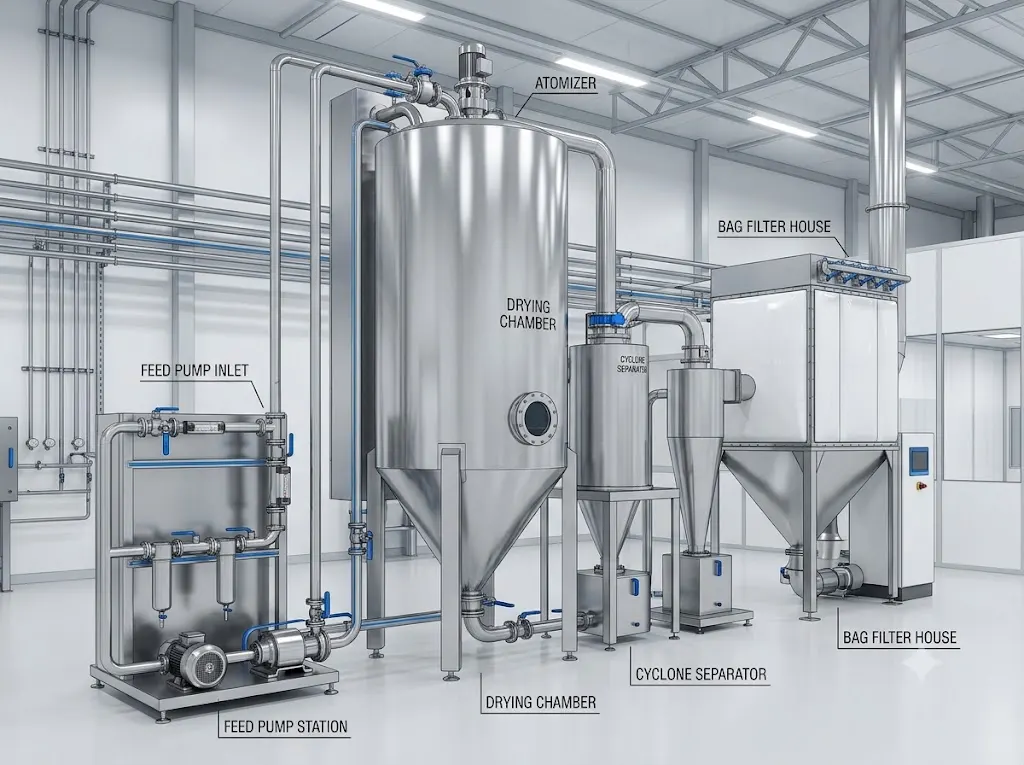
Der Übergang zur kontinuierlichen Hochleistungstrocknung erfordert ein umfassendes Verständnis der instationären Materialverfolgung und der Prozessautomatisierung in Echtzeit. Bei Jiangsu Changshi Trocky Technology Co., Ltd., Wir sind darauf spezialisiert, traditionelle Stapelverarbeitungsvorgänge in hocheffiziente Prozesse umzuwandeln, Vollautomatische kontinuierliche Pulverproduktionslinien. Angetrieben durch unser hochmodernes Fertigungszentrum mit 10.000 Quadratmetern Fläche und einem speziellen R&D-Teilung von über 20 leitende Verfahrensingenieure, Wir liefern komplett, individuelle, schlüsselfertige Lösungen, die auf globale Exporteure mit hohem Volumen zugeschnitten sind.
Unsere industriellen kontinuierlichen Trocknungssysteme basieren auf robusten technischen Prinzipien, um Betriebszeit und physikalische Präzision zu gewährleisten:
- Benutzerdefinierter Parameterprozessabgleich: Denn kontinuierliche Linien müssen ständige Materialschwankungen bewältigen, ohne dass es zu Verstopfungen kommt, Unsere Ingenieure führen umfangreiche Tests durch Materialpräzisionstests um die genaue Fluidisierungsgeschwindigkeit Ihres Ausgangsmaterials zu definieren, Ruhewinkel, und Bindung von Feuchtigkeitsenergie.
- Mehrzonen-Wärmeprogrammierung: Unsere kontinuierlichen Wirbelschicht- und Bandkonfigurationen sind unabhängig voneinander, Isolierte Heizzonen, die von Präzisions-SPS-Systemen gesteuert werden. Dies ermöglicht es dem Bediener, der Nasseinlasszone hohe Hitze für die Entspannungsverdampfung zuzuführen und gleichzeitig auf eine sanfte Verdampfung zu reduzieren, Niedrige Temperaturen in der Nähe der Austragszone, um die Produktintegrität zu gewährleisten.
- Fortschrittliche versiegelte Systemtechnik: Um Produktstaubemissionen oder das Eindringen von Umgebungsfeuchtigkeit zu verhindern, Alle kontinuierlichen Leitungen sind mit absoluter mechanischer Abdichtung und Unterdruck-ausgeglichenen Ventilatoren ausgestattet, Gewährleistung der strikten Einhaltung von Umweltvorschriften und globalen Richtlinien zur Arbeitssicherheit.
- Vermögen 500 Vertrauenswürdige Komponenten: Jede Einheit integriert erstklassige elektrische Automatisierung, High-End-Metallurgie, und robuste verschleißfeste Legierungen, Sicherstellen, dass die kontinuierliche Ausrüstung die angestrebten jährlichen Betriebsverkaufszyklen ohne unerwartete mechanische Ermüdung sicher erreicht.
FAQ: Wichtige technische Klarstellungen
Q1: Was ist die Mindestproduktionsschwelle, bei der eine Anlage von der Chargen- auf die kontinuierliche Trocknung umstellen sollte??
Der genaue Wendepunkt hängt vom Produktwert und den Materialeigenschaften ab, a general engineering rule of thumb dictates that if your facility’s output requirements exceed $500\text{ kg/Std}$ to $1,000\text{ kg/Std}$ kontinuierliches Trockenpulver, Chargenkonfigurationen werden aufgrund extremer Arbeitskosten und kumulierter Ausfallzeiten wirtschaftlich unrentabel. Für Kapazitäten mit mehreren Tonnen pro Tag, Ein kontinuierlicher Trockner ist die einzig praktikable Methode, um Margen und Produktkonsistenz zu gewährleisten.
Q2: Wie handhaben Sie Reinigung und Produktwechsel in einem Durchlauftrockner im Vergleich zu einer Batch-Anlage??
Batch-Einheiten sind bei häufigem Betrieb einfacher zu reinigen, unabhängige Kleinserienproduktvariationen. Jedoch, für kontinuierliche Hochleistungssysteme für einzelne oder ähnliche Produktfamilien, Jiangsu Changshi Technology integriert automatisiert Clean-in-Place (CIP) Sprühkugeln und schnell öffnende Strukturmechanismen. Dies ermöglicht eine Innenreinigung mit hoher Geschwindigkeit ohne vollständige mechanische Demontage, Reduzierung der gesamten Wartungsdurchlaufzeiten auf einen Bruchteil herkömmlicher industrieller Wartungspläne.
Q3: Wie geht ein kontinuierliches System mit unerwarteten Schwankungen im anfänglichen Feuchtigkeitsgehalt des eingehenden Nassfutters um??
Unkontrollierte Feuchtigkeitsspitzen können bei generischen kontinuierlichen Anlagen zu Materialansammlungen oder unzureichend getrockneten Erträgen führen. Um dies zu umgehen, Unsere kundenspezifischen Maschinendesigns integrieren Echtzeit-Inline-Feuchtigkeitssensoren in Verbindung mit automatisierten SPS-Rückkopplungsschleifen. Wenn die Feuchtigkeit am Einlass ansteigt, Das System verlangsamt automatisch den Zufuhrantrieb mit variabler Geschwindigkeit oder moduliert die Luftgeschwindigkeit des Ventilators, um die Verweilzeit der Partikel geringfügig zu verlängern, Stellen Sie sicher, dass das fertige Pulver stets Ihre strengen Feuchtigkeitsgrenzwerte einhält.
Steigern Sie die Effizienz Ihrer Fabrikhalle
Lassen Sie es nicht veraltet sein, Batch-Zyklen mit hohem Wartungsaufwand begrenzen den täglichen Durchsatz Ihrer Anlage und erhöhen Ihren Energieaufwand. Die Umrüstung auf eine automatisierte kontinuierliche Trocknungslinie ist ein entscheidender Schritt in Richtung globaler Vorherrschaft in der Lieferkette.
Kontaktieren Sie die internationalen Projektmanager unter Jiangsu Changshi Trocky Technology Co., Ltd. Sichern Sie sich noch heute unseren Master-Engineering-Katalog oder vereinbaren Sie eine Inline-Videoberatung mit unserem technischen Team. Lass uns 20+ Mitglied der leitenden technischen Abteilung entwirft einen maßgeschneiderten Entwurf Prozessanpassung Matrix für Ihre Hochleistungsproduktionsanlage, Bereitstellung einer maßgeschneiderten kontinuierlichen Lösung, die den Ertrag maximiert und die Betriebskosten senkt.