5 Smart Industrial Drying Technology Trends 2026: A Practical Guide
5 Smart Industrial Drying Technology Trends 2026: A Practical Guide
Factory managers researching industrial drying technology trends 2026 are usually trying to make a practical decision: reduce energy exposure, protect heat-sensitive materials, improve uptime, or keep a new line flexible. The right answer depends on feed properties and measured process losses, not on a trend label.
Jiangsu Changshi Drying Technology Co., Ltd. has more than 20 years of experience in drying machinery and operates a 10,000 m² manufacturing facility. We use material testing, process matching, and made-to-measure design to turn a technology discussion into an equipment specification.
This guide separates useful engineering directions from unsupported promises. For each trend, identify the condition it solves, the evidence required before investment, and the action your team can take during RFQ or pilot testing.
Why do industrial drying technology trends 2026 begin with process data?
Drying performance is shaped by inlet and outlet air conditions, feed concentration, viscosity, solids loading, residence time, airflow distribution, and the required final moisture. A change in one variable can improve energy use while damaging flowability, flavour, colour, or active-ingredient stability. This is why industrial drying technology trends 2026 should be evaluated against a plant baseline.
Before comparing equipment, record the current process at a useful operating point. Capture feed rate, moisture before and after drying, thermal input, exhaust condition, cleaning time, and unplanned stops. This baseline makes later claims testable.
- Define the product quality limits before selecting a dryer.
- Separate measured values from supplier estimates.
- Use the same feed and operating window for comparison tests.
- Write acceptance criteria into the technical specification.
How is heat recovery changing industrial drying system design?
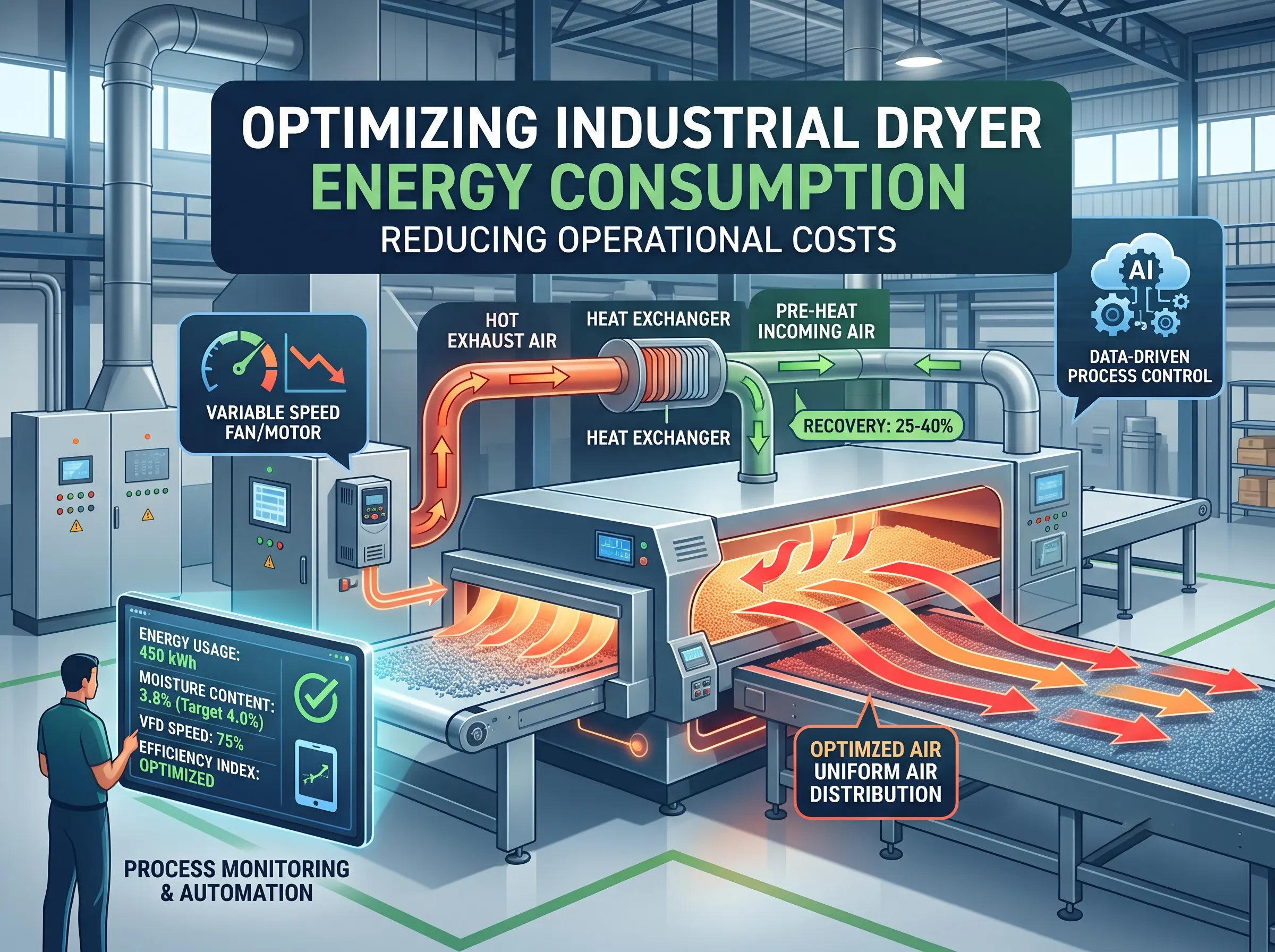
Heat recovery is receiving attention because exhaust air still contains thermal energy. A heat exchanger, heat pump, or desiccant arrangement may recover part of that energy, but the design must account for fouling, cross-contamination, pressure drop, cleaning access, and the temperature required by the feed.
The U.S. Department of Energy describes process heat as thermal energy used to produce, treat, or alter manufactured goods. Its industrial drying research also shows why system-level evaluation matters: heat recovery cannot be judged separately from airflow, product quality, and the rest of the thermal cycle.
Action plan: request an energy balance showing where heat enters, where it leaves, and what changes after recovery. For industrial drying technology trends 2026, that balance is the decision document. Ask the supplier to state the measurement method and the operating assumptions instead of presenting an unqualified saving percentage.
What role will sensors and predictive maintenance play?
Sensors are useful when they support a defined decision. Pressure can signal blockage or feed change; temperature can reveal control drift; vibration can indicate mechanical wear; and moisture data can show whether the product is leaving the process within specification.
A full digital twin is not a prerequisite. Many plants can begin with a small set of reliable signals, alarm limits, and an escalation procedure. The value comes from connecting the reading to an inspection or process adjustment, not from collecting data without an owner. This evidence-based approach keeps industrial drying technology trends 2026 practical.
JSCSTECH supports overseas technical communication with a 24-hour response channel. During equipment selection, ask how sensor tags, alarm histories, manuals, and remote troubleshooting will be handed over to your maintenance team.
When are hybrid and low-temperature drying systems appropriate?
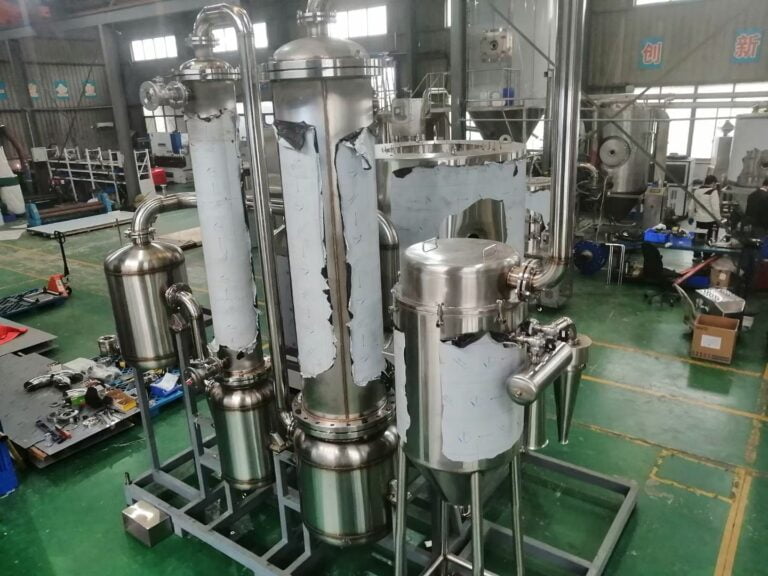
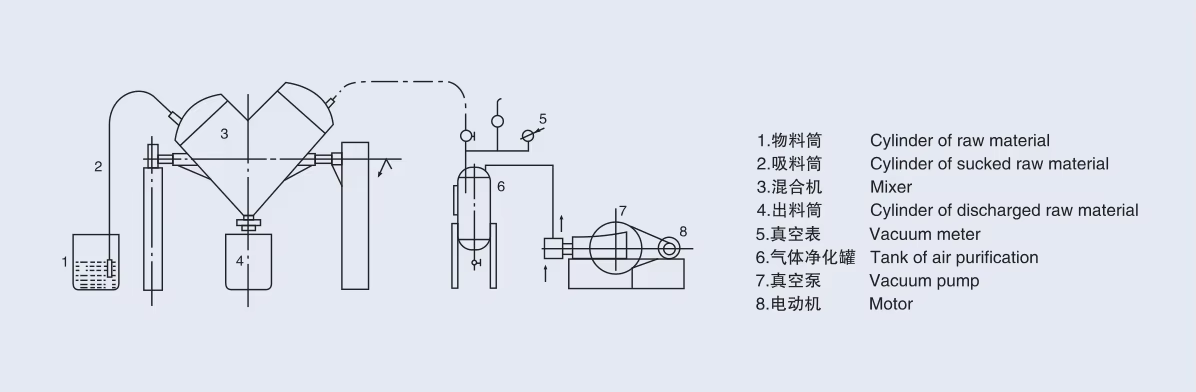
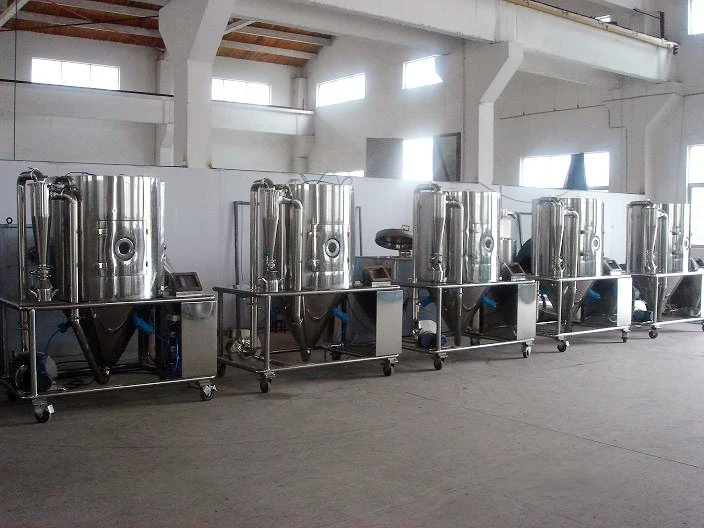
Hybrid drying becomes relevant when one drying method cannot protect both product quality and throughput. Vacuum, spray, fluid-bed, belt, or other stages may be combined when the feed is heat-sensitive, sticky, hygroscopic, or difficult to dry uniformly.
Do not select a hybrid layout only because it is fashionable. Compare the temperature history, residence time, oxygen exposure, cleaning requirements, solvent or dust hazards, and the number of control points introduced by the added stage.
Material testing is essential here. JSCSTECH works with the customer’s raw material to evaluate process matching before a final made-to-measure proposal. The test should define what success means: moisture, particle size, bulk density, flowability, colour, activity, or another product-specific measure.
How can modular design reduce future project risk?
Modular equipment can help when production volume, product mix, or site constraints are expected to change. The benefit is not automatic; it depends on whether utilities, controls, dust collection, feeding, discharge, and cleaning systems are designed for the planned expansion. Ask the supplier to show which interfaces are fixed and which can be expanded.
During procurement, ask for the boundary of the module and the boundary of the future upgrade. Check whether the first phase leaves enough electrical capacity, duct space, maintenance access, and control-system capacity for the next phase.
This is also a logistics question. Confirm lifting points, shipping dimensions, installation sequence, commissioning responsibilities, and the documentation required by the local site team. These details reduce the risk that a technically suitable system becomes difficult to install or service.
How should a plant evaluate electrification and decarbonization options?
Electric heating, heat pumps, recovered heat, and lower-carbon fuels may all be relevant, but the suitable option depends on electricity availability, utility tariffs, temperature demand, local emissions rules, and the process safety design. Compare the options against the actual operating hours and product temperature limits at your site.
Avoid comparing energy sources only by nameplate price. A structured comparison is another practical use of industrial drying technology trends 2026. Build a site-specific model that includes peak demand, operating hours, heat losses, controls, maintenance, and backup requirements. Treat any future energy price or carbon-cost assumption as an assumption that must be updated.
A supplier should explain how the heating system interacts with airflow, temperature control, product quality, and emergency shutdown. JSCSTECH can use the customer’s material and project requirements to develop a customized technical scheme rather than forcing one heating arrangement onto every feed. Ask for the control narrative and the conditions under which the heating source must switch or stop.
What should buyers request before approving a 2026 dryer project?
Supplier Audit Checklist: 5 Questions to Ask Before Signing a Purchase Order
Use the checklist to test whether a proposed trend has been translated into a verifiable project plan. Each answer should identify the evidence, the responsible party, and the acceptance condition for the equipment purchase.
- Energy balance: which inputs and losses are measured, and under what operating point?
- Material test report: which feed properties and product-quality results support the equipment selection?
- Controls and data list: which sensors, alarms, historian tags, and manuals are included?
- Expansion plan: which utilities, interfaces, and maintenance spaces are reserved for future capacity?
- Service plan: who responds to technical issues, through which channel, and within what stated response window?
The strongest proposal is not the one with the longest technology list. It is the one that states the process boundary, documents the evidence, identifies unknowns, and gives your team a method to accept or reject the result.
Frequently Asked Questions About Industrial Drying Technology Trends 2026
Which industrial drying technology trend should a plant evaluate first?
Start with a measured energy and quality baseline. Review moisture targets, heat losses, exhaust conditions, downtime records, and material sensitivity before selecting heat recovery, controls, or a different dryer configuration. The first upgrade should address the largest verified constraint.
Can heat recovery be added to an existing industrial dryer?
Sometimes, but the answer depends on exhaust temperature, contamination risk, airflow, available space, and process controls. A supplier should inspect the existing system and model the operating conditions before proposing a heat exchanger or heat-pump arrangement.
Are digital sensors useful without a full digital twin?
Yes. Pressure, temperature, vibration, flow, and moisture signals can improve troubleshooting even when a full digital twin is not practical. Start with sensors tied to a defined operator action and expand only when the data quality and maintenance workflow are reliable.
How can a buyer compare the cost of new drying technology?
Compare total cost of ownership rather than purchase price alone. Include energy, cleaning, spare parts, labour, downtime, integration, validation, and future expansion. Ask for assumptions and verify critical results with your own material test or acceptance run.
For a project review, compare this guide with our industrial dryer energy consumption guide, fluid bed dryer and rotary dryer comparison, and food spray dryer guide. Send your feed data to JSCSTECH for a material test and customized technical scheme.
U.S. Department of Energy process heat guidance explains the role of thermal energy in manufacturing. For a quick technical response from JSCSTECH, contact Leta on WhatsApp.