Processo de secagem por spray explicado de forma simples para todos
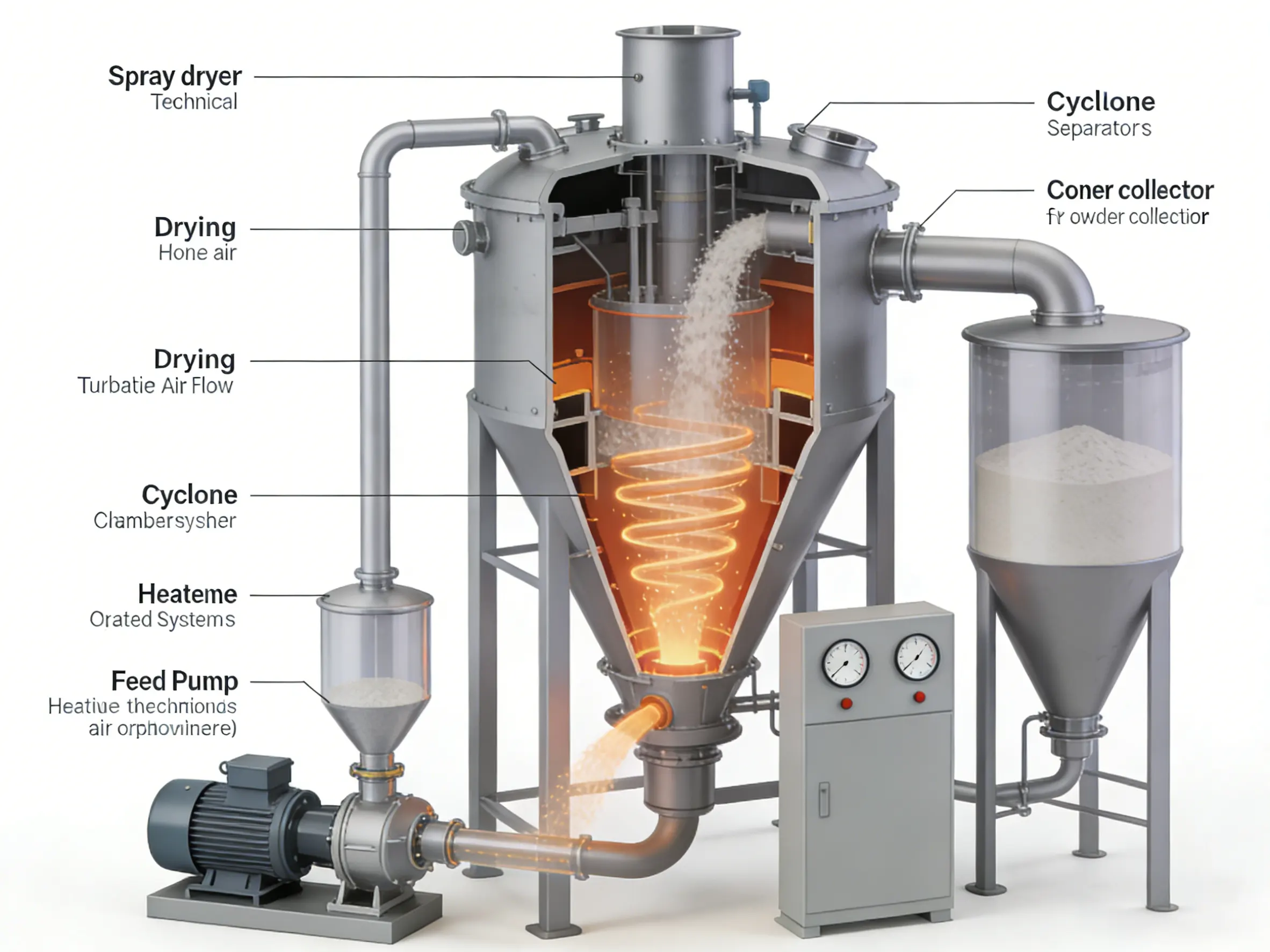
Você deve estar se perguntando como os líquidos se transformam em pós tão rapidamente. O processo de secagem por spray ajuda você a conseguir isso, transformando um líquido em pequenas gotas, em seguida, seque-os com ar quente para criar um pó fino. Muitas indústrias usam esse processo, incluindo processamento de alimentos, produtos farmacêuticos, produtos químicos, cerâmica, e outros setores manufatureiros. Você vê os resultados em produtos de uso diário, como leite em pó ou café instantâneo.
Takeaways -chave
A secagem por pulverização transforma rapidamente líquidos em pós usando ar quente e pequenas gotas. Este método é eficiente e amplamente utilizado nas indústrias alimentícia e farmacêutica.
O processo envolve a preparação do líquido, atomizando-o em gotículas, e secando rapidamente com ar quente. Cada etapa é crucial para obter pó de alta qualidade.
A secagem por spray ajuda a criar produtos como leite em pó e medicamentos inaláveis. Isso garante que esses produtos sejam fáceis de armazenar, mistura, e usar.
Controlar o tamanho das gotas e a temperatura do ar é fundamental para produzir pó de qualidade consistente. Isso evita aglomeração e garante uniformidade no produto final.
Você se beneficia da secagem por spray todos os dias, seja no seu café ou remédio. Este processo mantém os produtos frescos e eficazes por mais tempo.
Noções básicas do processo de secagem por pulverização
O que é secagem por spray?
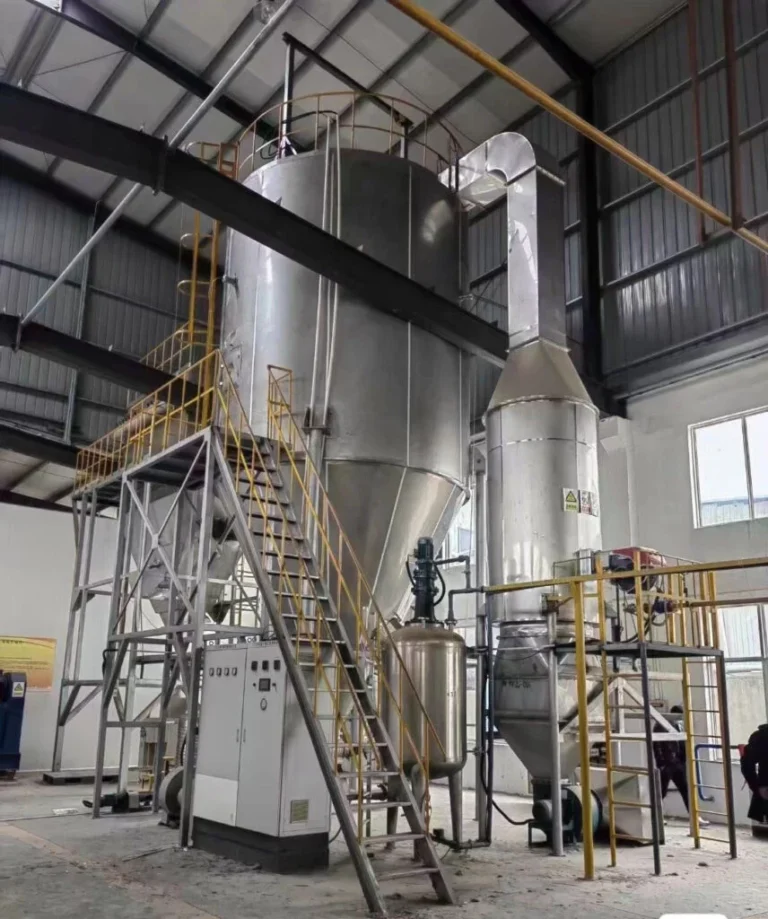
Você pode pensar no processo de secagem por pulverização como uma forma de transformar líquidos em pós de forma rápida e eficiente.. Este método usa uma máquina especial que pulveriza o líquido em pequenas gotículas. O ar quente seca essas gotículas quase instantaneamente, deixando para trás pó fino. O processo funciona concentrando primeiro o líquido, o que significa remover um pouco de água para torná-la mais espessa. Então, a máquina quebra o líquido em pequenas gotas, tornando mais fácil para o ar quente secá-los. Você obtém um pó fácil de armazenar, mistura, e usar.
Secagem por pulverização transforma substâncias líquidas em pós finos. O processo usa atomização e ar quente para evaporar a umidade rapidamente. Você vê esse método sendo usado em muitos setores porque economiza tempo e energia em comparação com métodos de secagem mais antigos.
O processo de secagem por spray se destaca porque:
Cria pós com tamanho e forma controlados.
Funciona mais rápido do que outros métodos de secagem, como secadores rotativos ou de bandeja.
Projetos avançados ajudam a economizar energia e melhorar a transferência de calor.
Finalidade e usos
Você encontra o processo de secagem por pulverização usado em muitos campos. As empresas alimentícias o utilizam para fabricar produtos como leite em pó, café instantâneo, e aromatizantes. As empresas farmacêuticas dependem dele para produzir medicamentos, especialmente aqueles que precisam de manuseio cuidadoso, como medicamentos e proteínas sensíveis ao calor. Este processo ajuda a criar pós para medicamentos e vacinas inaláveis, mantendo-os estáveis e eficazes por períodos mais longos.
Os usos comuns incluem:
Preparação de alimentos em pó para fácil mistura e longa vida útil.
Criação de pós inaláveis para administração de medicamentos.
Melhorando a solubilidade e absorção do medicamento em seu corpo.
Desenvolvimento de microcápsulas para medicamentos de liberação controlada.
Você se beneficia da secagem por spray todos os dias, se você bebe café instantâneo ou toma remédios. O processo ajuda as empresas a controlar a qualidade e segurança de seus produtos.
Etapas do processo de secagem por pulverização
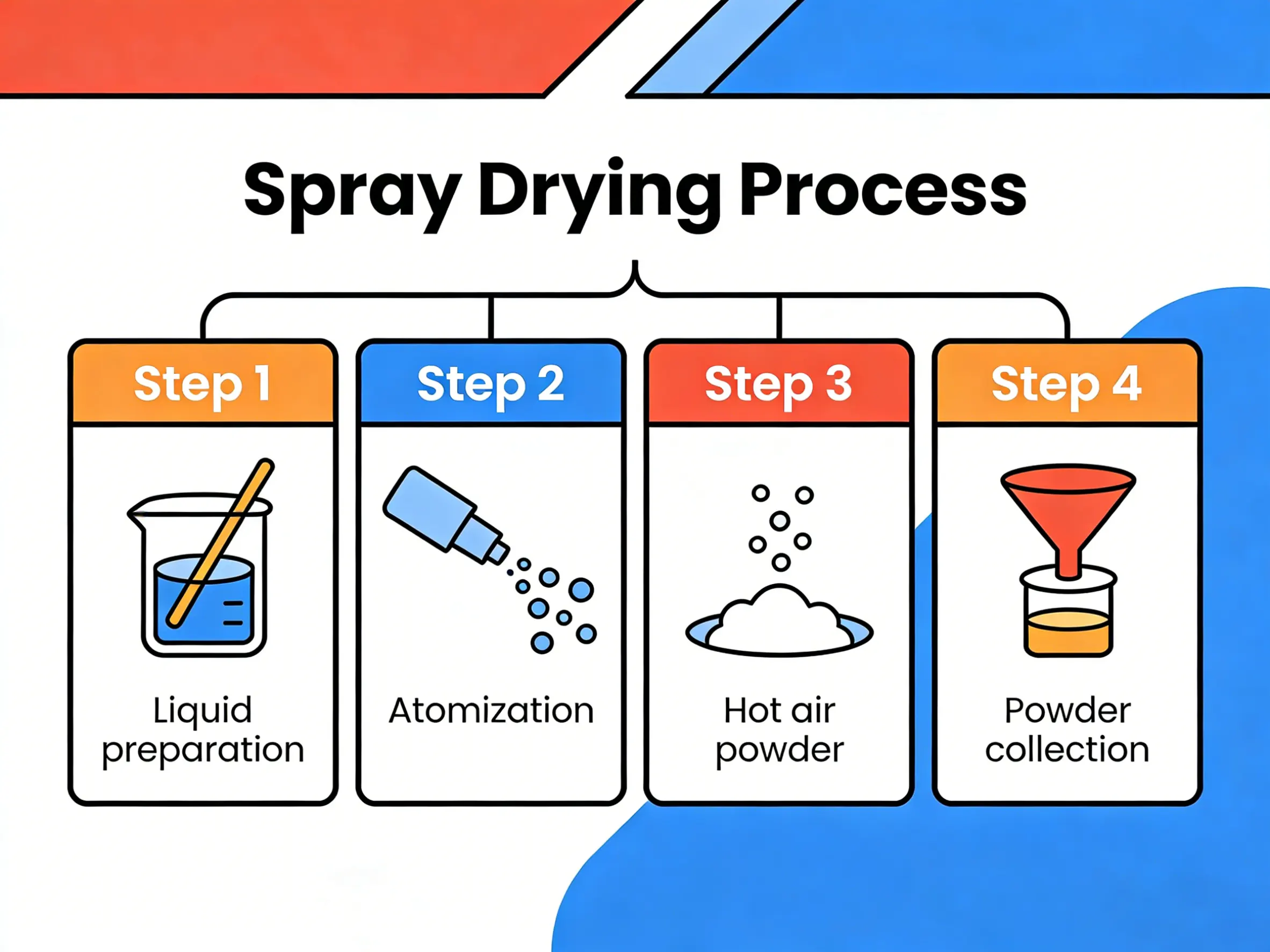
Preparando a alimentação líquida
Você inicia o processo de secagem por pulverização preparando o alimentação líquida. Esta etapa garante que o líquido esteja pronto para secar e se transformará em um bom pó. O líquido pode ser uma solução, uma suspensão, ou uma emulsão. Você ajusta sua concentração e espessura para que funcione bem na máquina.
Você mistura os ingredientes para obter a concentração certa.
Você verifica a espessura, chamada viscosidade, para garantir que flua suavemente.
Você filtra o líquido para remover quaisquer grumos ou partículas indesejadas.
Dica: Uma ração líquida bem preparada ajuda a obter um pó com textura e qualidade certas.
Atomizando em gotículas
Próximo, você usa a atomização para quebrar o líquido em pequenas gotículas. Esta etapa é importante porque o tamanho da gota afeta a rapidez com que o líquido seca e a aparência do pó final.. Você pode escolher diferentes técnicas de atomização dependendo de suas necessidades.
Vantagens | Aplicativos | |
|---|---|---|
Atomização Rotativa | Produz partículas uniformes; lida com líquidos espessos | Usado para leite em pó, creme de café |
Atomização de Pressão | Faz bem, até gotículas; economiza energia | Usado para medicamentos e pós químicos finos |
Atomização de dois fluidos | Cria gotas muito finas; controle preciso | Usado para pós farmacêuticos e cosméticos |
Atomização Ultrassônica | Processo suave; gotas muito finas | Usado para medicamentos e revestimentos sensíveis ao calor |
Gotículas menores seca mais rápido e fornece partículas de pó menores. Você obtém pós de melhor mistura e dissolução mais rápida quando controla o tamanho das gotas.
O tamanho da gota decide quão pequenas serão as partículas de pó.
Partículas menores se dissolvem mais rapidamente e funcionam melhor nos produtos.
Você mantém a qualidade do pó consistente controlando o tamanho das gotas.
Secagem Rápida com Ar Quente
Após a atomização, você envia as gotículas para uma câmara cheia de ar quente. A alta temperatura faz com que a água em cada gota evapore quase instantaneamente. Você controla a temperatura do ar para proteger ingredientes sensíveis e obter o melhor pó.
Aplicativo | Temperatura de saída (°C) | |
|---|---|---|
Leite em pó | 150–220 | 70–100 |
Produtos Especiais | Até 230 | 90–110 |
O ar quente remove rapidamente a umidade das gotículas.
Você ajusta a temperatura do ar, Tamanho da gota, e fluxo de ar para obter o pó desejado.
O processo de secagem por spray funciona rápido, materiais tão delicados não são danificados.
Observação: Secagem rápida ajuda você a manter vitaminas, proteínas, e sabores seguros no pó final.
Coletando o pó
Quando as gotas secam, eles se transformam em partículas de pó. Você precisa coletar essas partículas com segurança e mantê-las puras. Você usa máquinas diferentes para separar o pó do ar.
Descrição | Aplicativos | |
|---|---|---|
Separadores de Ciclone | Gira o ar para colocar o pó em um funil | Bom para grandes quantidades; pode perder algumas partículas finas |
Filtros de bolsa | Retém pó em sacos de tecido | Funciona bem para pós finos; precisa de limpeza regular |
Precipitadores Eletrostáticos | Usa cargas elétricas para coletar pó nas placas | Melhor para pós puros e pegajosos; mais complexo |
Você também pode usar peneiramento, classificação aérea, e etapas extras de purificação para melhorar a qualidade do pó. Você armazena o pó em recipientes limpos e testa-o para garantir que atende aos padrões de segurança.
Dica: Coleta e armazenamento cuidadosos mantêm seu pó fresco e seguro para uso.
O processo de secagem por pulverização geralmente ocorre continuamente nas fábricas. Você consegue altas taxas de produção e pós uniformes. Você controla o tamanho das partículas e a umidade para atender às necessidades do seu produto.
Benefícios do processo de secagem por spray
Secagem rápida e eficiente
Você obtém resultados rápidos com o processo de secagem por spray. A máquina transforma líquido em pó em segundos. Essa velocidade ajuda você a produzir grandes quantidades de pó rapidamente. Industries choose spray drying because it works much faster than freeze drying or drum drying. You can see the difference in the table below:
Vantagem | Secagem por pulverização | Liofilização | Secagem de tambor |
|---|---|---|---|
Drying Speed | Very fast | Slow | Moderado |
Production Rate | Alto | Baixo | Médio |
You control the drying by adjusting droplet size, temperatura do ar, and air speed. Smaller droplets dry faster. Higher temperatures and faster air movement help remove moisture quickly. You save energy by using advanced techniques like superheated steam and AI optimization. These methods lower energy use and keep the process efficient.
Dica: Quick drying protects sensitive ingredients like vitamins and proteins, so your powder stays nutritious.
Consistent Powder Quality
You get uniform powder every time. The spray drying process lets you control particle size and moisture. You adjust the machine settings to keep the powder consistent. Quality control measures help you check air supply, alimentação líquida, and atomization. You can see some key controls in the table below:
Quality Control Measure | What You Control |
|---|---|
Air Supply | Fluxo de ar, temperatura, umidade |
Liquid Supply | Conteúdo de sólidos, taxa de alimentação |
Atomização | Droplet size, nozzle speed |
You avoid common problems like clumping or uneven particles by using better nozzle designs and cleaning systems. These improvements help you keep the powder safe and easy to use.
Wide Industry Use
You find spray drying in many industries. Food companies use it for milk powder, café instantâneo, e fórmula infantil. Pharmaceutical companies rely on it for inhalable medicines and protein powders. Chemical and consumer product makers use it for detergents, enzimas, and specialty cleaners.
Produtos farmacêuticos: Inhalable powders, microcapsules
Produtos Químicos: Technical powders for various uses
Consumer Products: Detergentes, cleaners, enzyme granules
Você se beneficia da secagem por spray todos os dias. The process helps companies make finished, packaged powders that last longer and stay fresh. You get products that are easy to store, mistura, e usar.
Everyday Products
You see the results of the spray drying process in many products you use every day. This method helps companies create powders that are easy to store, mistura, e usar. Let’s look at some familiar examples.
Food Powders
You find spray-dried powders in your kitchen. Leite em pó is a popular example. Companies use the spray drying process because it works quickly and makes large amounts of powder. No entanto, high temperatures can change the proteins and reduce some nutrients. Freeze drying keeps more nutrients but costs more and takes longer. You also see instant coffee, tea powders, fruit and vegetable powders, and protein supplements made this way.
Leite em pó
Instant coffee and tea
Pós de frutas e vegetais
Proteínas em pó e suplementos nutricionais
Aromas e especiarias
Dica: Spray-dried food powders dissolve easily in water, making them perfect for quick drinks and recipes.
Produtos farmacêuticos
You benefit from spray-dried medicines. This process helps make powders for inhalers and nasal sprays. It also improves how well your body absorbs some drugs. You get medicines that last longer and work better because of this technology.
Solid dispersion systems to help drugs dissolve
Modified release medicines for steady effects
Stable powders for biologic drugs
Aspecto | Explicação |
|---|---|
Amorphous Solid Dispersions | Secagem por pulverização converts drugs into forms your body absorbs better. |
Crystallisation Risk | Some powders can change over time, so companies choose special ingredients to keep them stable. |
Moisture Sensitivity | Powders can absorb water, so packaging keeps them dry and safe. |
Other Common Goods
You use many other products made with spray drying. This process helps create powders for cleaning, nutrição, and flavor.
Detergents and cleaning powders
Enzyme granules for laundry
Specialty chemicals for industry
Observação: The spray drying process helps companies make products that stay fresh and work well for you.
You now know that spray drying turns liquids into powders quickly and safely. This process keeps your food and medicine fresh, easy to use, and long-lasting. You see its results in milk powder, café instantâneo, and many health products.
Descrição | |
|---|---|
Reduced Water Activity | Increases shelf life and keeps products safe. |
Improved Powder Quality | Prevents clumping and keeps powders easy to use. |
Qualidade consistente do produto | Ensures you get the same quality every time. |
If you want to learn more, explore how spray drying shapes the products you use every day! 😊
Perguntas frequentes
What is the main purpose of spray drying?
You use spray drying to turn liquids into powders quickly. This process helps you make products that last longer and are easy to store or mix.
Can spray drying change the taste or nutrition of food?
You may notice a slight change in taste or nutrition. High heat can affect some vitamins or flavors. Most companies control the process to keep food quality high.
Is spray drying safe for making medicines?
You can trust spray drying for medicines. The process keeps drugs stable and pure. Companies use strict safety checks to protect your health.
What types of products can you make with spray drying?
Você pode fazer leite em pó, café instantâneo, protein supplements, medicines, detergentes, and even some cosmetics. Many everyday items start as a liquid and become powder through spray drying.