Avaliando métodos experimentais e computacionais em cálculos de projeto de secador de spray
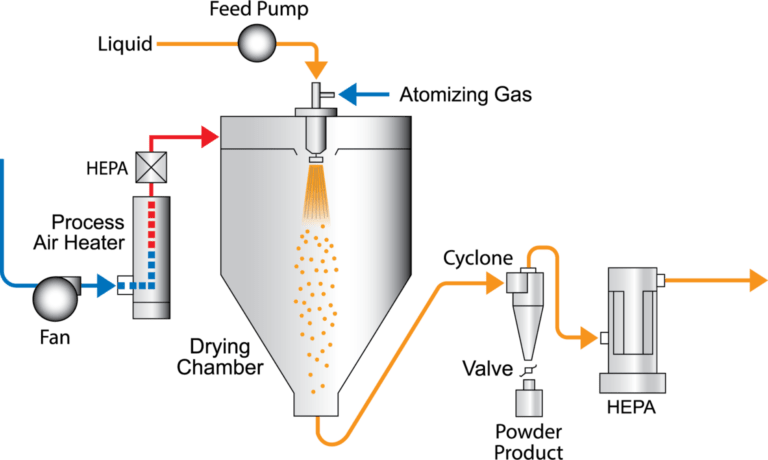
Escolher a maneira certa de fazer cálculos de projeto de secador por spray é importante. Afeta o quão bem o processo funciona e quão bom é o produto. Cientistas usam experimentos, como projeto estatístico de experimentos, para descobrir como as mudanças no processo afetam o produto.
Maneiras baseadas em modelos usam balanços de massa e energia. Isso ajuda a diminuir o número de experimentos necessários. Eles também facilitam o uso do método em maior escala.
Usar apenas métodos estatísticos pode não ser tão exato. Este é um problema maior quando se fabrica mais produtos de uma vez.
Parâmetro do Processo | Estratégia de Controle / Faixa | Impacto na qualidade do produto / Eficiência |
|---|---|---|
Temperatura de saída do gás de secagem | Temperatura do produto 5–20 °C mais baixa do que saída | Forte ligação com as características do produto |
Controle de tamanho de gota | Gerenciado por energia de atomização | Secagem uniforme, morfologia consistente do produto |
Escolher o melhor método torna os cálculos do projeto do secador por spray mais confiáveis e repetíveis.
Takeaways -chave
Métodos experimentais fornecem dados reais. Esses dados mostram como funcionam os secadores por spray. Também ajuda a tornar os produtos melhores.
Modelos computacionais como CFD e modelos termodinâmicos ajudam os engenheiros a testar ideias rapidamente. Esses modelos economizam tempo e recursos.
O uso de dados experimentais e modelos computacionais proporciona melhores projetos de secadores de spray. Esses designs são mais precisos, confiável, e fácil de escalar.
A escolha do melhor método depende dos objetivos do projeto. Também depende do que você tem e do que o produto precisa. Isso ajuda a fazer com que a secagem funcione bem e não custe muito.
No futuro, IA, gêmeos digitais, e ferramentas de economia de energia ajudarão na secagem por pulverização. Essas tendências o tornarão mais inteligente, mais verde, e mais eficiente.
Escopo e Critérios
Visão geral dos principais métodos
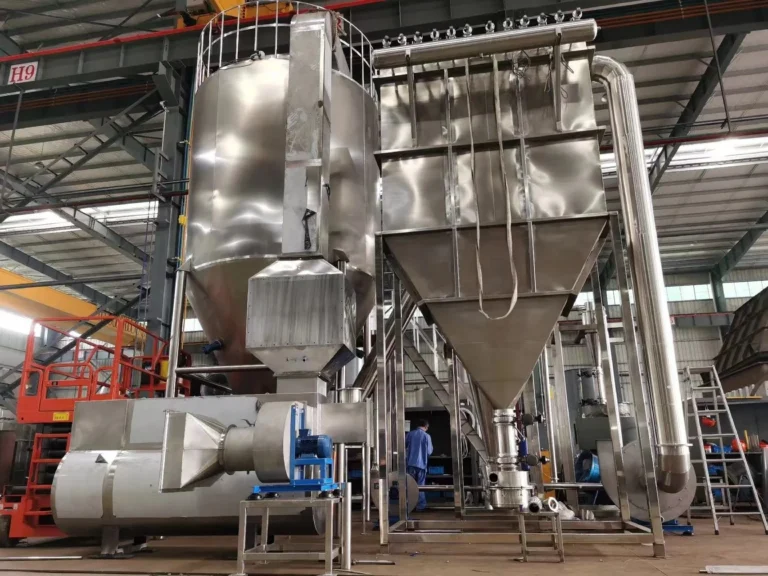
Cálculos de projeto de secador por spray use dois tipos principais de métodos. Estes são métodos experimentais e computacionais. Métodos experimentais usam medições reais para ver como as coisas mudam durante a secagem. Os cientistas usam pequenos secadores de spray em laboratórios para esses testes. Eles usam ferramentas como anemômetros Pitot e pressostatos. Estas ferramentas verificam a rapidez com que o gás de secagem se move e a quantidade de gás que flui. Eles também medem a pressão do gás de atomização. As informações dessas ferramentas ajudam os cientistas a entender melhor o processo de secagem.
Os métodos computacionais usam coisas como modelos termodinâmicos, CFD, Rastreamento de partículas Lagrangianas, e análise de energia ou exergia. Modelos termodinâmicos usam balanços de massa e energia para adivinhar o que acontecerá, como a temperatura de saída. CFD mostra imagens detalhadas de temperatura e velocidade dentro do secador. Os métodos Lagrangeanos seguem cada gota. A análise de energia e exergia analisa o quão eficiente é o processo e quanta entropia é produzida. Estudos mostram que o uso desses métodos com aprendizado de máquina pode melhorar os resultados e reduzir experimentos extras. Os cientistas muitas vezes verificam se seus modelos estão corretos comparando-os com dados de testes reais.
Observação: Cada método tem seus próprios pontos fortes. Métodos experimentais fornecem prova direta, enquanto os modelos computacionais permitem testar muitas ideias rapidamente e ajudam a melhorar o processo.
Métricas de avaliação
Especialistas usam diferentes maneiras de comparar métodos para cálculos de projetos de secadores por spray:
Precisão: As pessoas usam coisas como Root Mean Square Error (REQM), Erro Médio Absoluto (MAE), e Coeficiente de Determinação (R²) para ver o quão próximas as estimativas do modelo estão dos resultados reais. Por exemplo, RMSE para temperatura de saída pode estar entre 2.15 K e 14.91 K. Os valores de R² podem ir tão altos quanto 0.99.
Praticidade: É importante saber quão fácil é usar um método. CFD consome muito tempo e energia do computador. Modelos termodinâmicos são mais rápidos e precisam de menos dados.
Escalabilidade: Um bom método deve funcionar tanto para pequenos testes de laboratório quanto para grandes fábricas. A ideia de espaço de design ajuda a controlar o processo e torná-lo maior.
Validação: Bons métodos devem corresponder ao que acontece na vida real. Cientistas usam testes piloto e dados de fábrica para verificar se seus modelos estão corretos.
Esses pontos ajudam os engenheiros a escolher o melhor caminho para suas necessidades.
Métodos Experimentais
Distribuição do Tempo de Residência
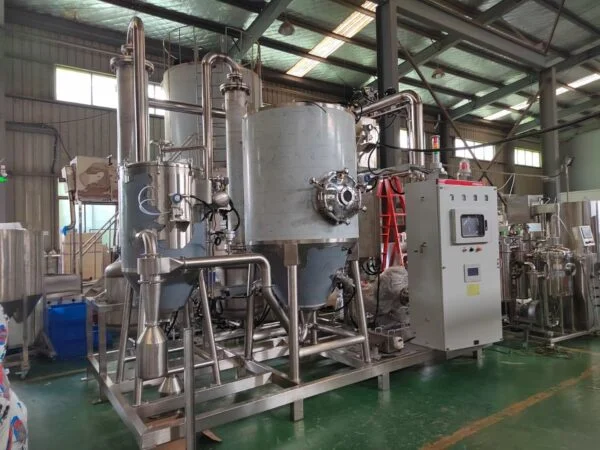
Engenheiros usam distribuição de tempo de residência, ou IDT, para ver quanto tempo as partículas e gases permanecem em um secador por spray. A IDT os ajuda a saber como as mudanças no design afetam a secagem e a qualidade do produto. Os pesquisadores costumam usar injeção de pulso de corante para seguir as partículas conforme elas se movem. Eles combinam os dados com modelos como CSTR-TIS para melhor compreensão.
Projeto de secador por spray | Razão média do tempo de residência entre partículas e gás (s/s) | Propagação de IDT (n) | Principais observações |
|---|---|---|---|
Projeto 1 & 2 | 13–18 | Maiores tempos de residência de partículas; mais deposição de parede | |
Projeto 3 & 4 | 1.5–2,5 (3), 1.0–1,7 (4) | 5–8 | Proporções mais baixas; melhor desempenho; menos deposição na parede |
Projetos mais recentes com câmaras cônicas funcionam melhor. Eles reduzem o acúmulo de paredes e aumentam a propagação do RTD. Isso ajuda na recirculação e secagem. Os testes RTD também mostram que os modelos CFD estão corretos.
Medições Físicas
Medições físicas são muito importantes em métodos experimentais para projeto de secadores por pulverização. Cientistas medem coisas como temperatura, umidade, e restos de umidade direto da secadora. Eles usam ferramentas como termopares, sensores de umidade, e pressostatos. Esses números os ajudam a criar modelos que mostram o que acontece na secadora. Por exemplo, um modelo dinâmico de um secador por spray de quatro estágios usou bons dados de teste para encontrar números importantes. As estimativas do modelo para temperatura e umidade foram próximas dos resultados reais dos testes. Dados de laboratório sobre umidade e temperatura de transição vítrea tornaram o modelo ainda melhor.
Dica: Boas medições físicas ajudam os engenheiros a alterar as configurações e tornar os produtos mais consistentes.
Validação com Dados Industriais
A verificação dos dados industriais garante que os métodos experimentais funcionem na vida real. Testes com secadores piloto e sílica pirogênica mostrou tamanhos de partículas medidos que correspondiam às estimativas do modelo. Testes de laboratório em leito fluidizado ajudaram a definir números de secagem, como transferência de calor e massa, para ajustar dados de temperatura e umidade. Esses números ajudaram a fazer boas simulações e projetos para grandes secadores. Estudos também verificaram modelo adivinha com dados de secadores reais que fazem alimentos. Os modelos adivinharam o fluxo de alimentação, temperatura de saída, tamanho de partícula, e velocidade de secagem muito bem. Esta forte correspondência mostra que métodos experimentais ajudam a tornar projeto de secador de spray cálculos confiáveis e ajudam a melhorar processos para muitos produtos.
Métodos Computacionais
Modelos Termodinâmicos
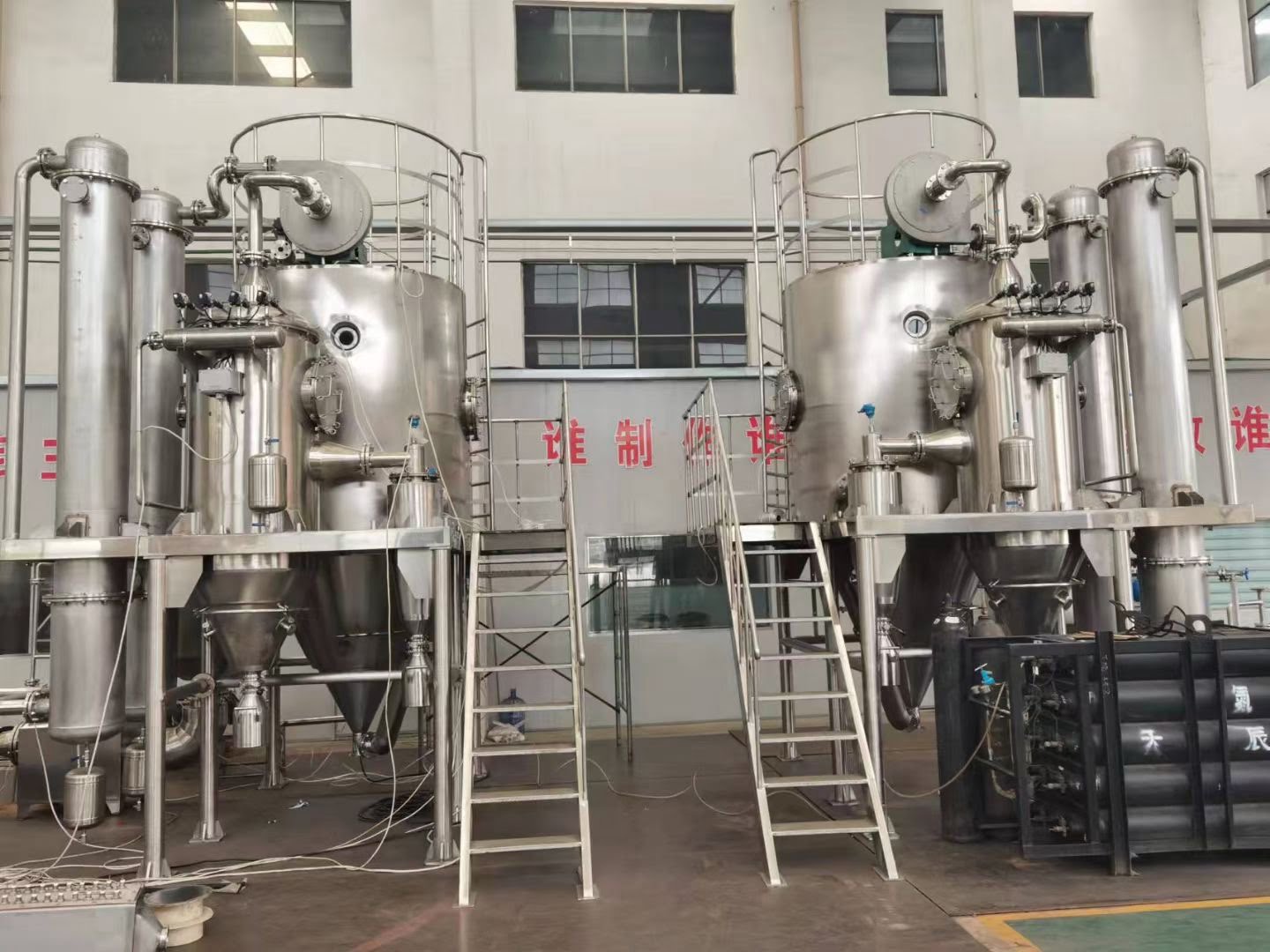
Os modelos termodinâmicos ajudam os engenheiros a adivinhar como o calor e a massa se movem em um secador de spray. Esses modelos usam números como temperatura do ar, umidade, e quão rápido o ar se move. Os engenheiros costumam usar regras bem conhecidas para transferência de calor e queda de pressão, como os de Kays e Londres. Eles também usam dados de testes sobre incrustações, o que significa que o leite em pó pode aderir aos trocadores de calor. Essa aderência altera a forma como o calor se move e a quantidade de energia que a secadora precisa.
Os engenheiros usam esses modelos para ver como as mudanças no projeto afetam o funcionamento do secador.
Eles podem adivinhar quanta energia a secadora usará e quanto produto produzirá.
Os modelos termodinâmicos também ajudam a decidir se um novo design economizará dinheiro.
Um exemplo real com um secador de leite mostrou que esses modelos podem adivinhar resultados reais. Os modelos usaram números reais, como temperatura e umidade do ar de exaustão, para corresponder ao que aconteceu na fábrica. Isso torna os modelos termodinâmicos uma ferramenta confiável para cálculos de projeto de secadores por spray.
Abordagens CFD e Lagrangianas
Dinâmica de Fluidos Computacional, ou CFD, e os métodos Lagrangianos mostram em detalhes o que acontece dentro de um secador por spray. Os modelos CFD usam matemática para mostrar como o ar e as partículas se movem. O rastreamento Lagrangiano segue cada gota à medida que seca.
Engenheiros usam Estruturas Euleriana-Lagrangianas para modelar fluxo bifásico.
Eles resolvem as equações de Navier-Stokes para o ar e rastreiam a transferência de calor e massa para gotículas.
Modelos podem mostrar quanto tempo as partículas permanecem na câmara, o que é importante para produtos sensíveis ao calor.
CFD prevê fluxo de gás, taxas de secagem, e onde as partículas caem dentro do secador.
Os modelos CFD combinaram bem com os dados de teste. Por exemplo, modelos adivinharam como as mudanças nas condições da parede, como isolamento ou resfriamento, secagem alterada e recuperação de pó. O acoplamento bidirecional entre transferência de calor e massa tornou os modelos melhores. O CFD também permite que os engenheiros experimentem novos projetos sem construir secadores de teste caros.
Análise de Energia e Exergia
Energia e análise exergética ajudar os engenheiros a descobrir onde um secador por spray desperdiça energia. A análise de energia mostra quanta energia a secadora usa. A análise exergética vai além, mostrando onde a energia é desperdiçada e como corrigi-la.
Os engenheiros usam esses métodos para comparar diferentes designs de secadores.
Análise exergética aponta quais partes do secador desperdiçam mais energia.
Melhorias como melhor isolamento ou uso de aquecedores solares podem reduzir o uso de energia.
Parâmetro | Valor | Descrição |
|---|---|---|
0.768 kW | Energia proveniente de fonte elétrica | |
Consumo de energia do aquecedor solar de ar | 0.327 kW | Energia proveniente de fonte solar |
Redução da perda de calor por folhas de poliestireno | 4.9→2,27 W·m⁻²·K⁻¹ | Melhoria do isolamento |
Redução na relação de entrada de energia elétrica | 2.68→1,69 | 30% contribuição de energia solar |
Melhoria máxima de exergia no condensador | 0.233 kW | Maior destruição de exergia |
Melhoria exergética na câmara de secagem | 0.294 kW | Ineficiência significativa |
Melhoria exergética em aquecedor elétrico | 0.152 kW | Espaço para ganho de eficiência |
Melhoria exergética em aquecedor solar de ar | 0.097 kW | Ganhos potenciais no pré-aquecimento solar |
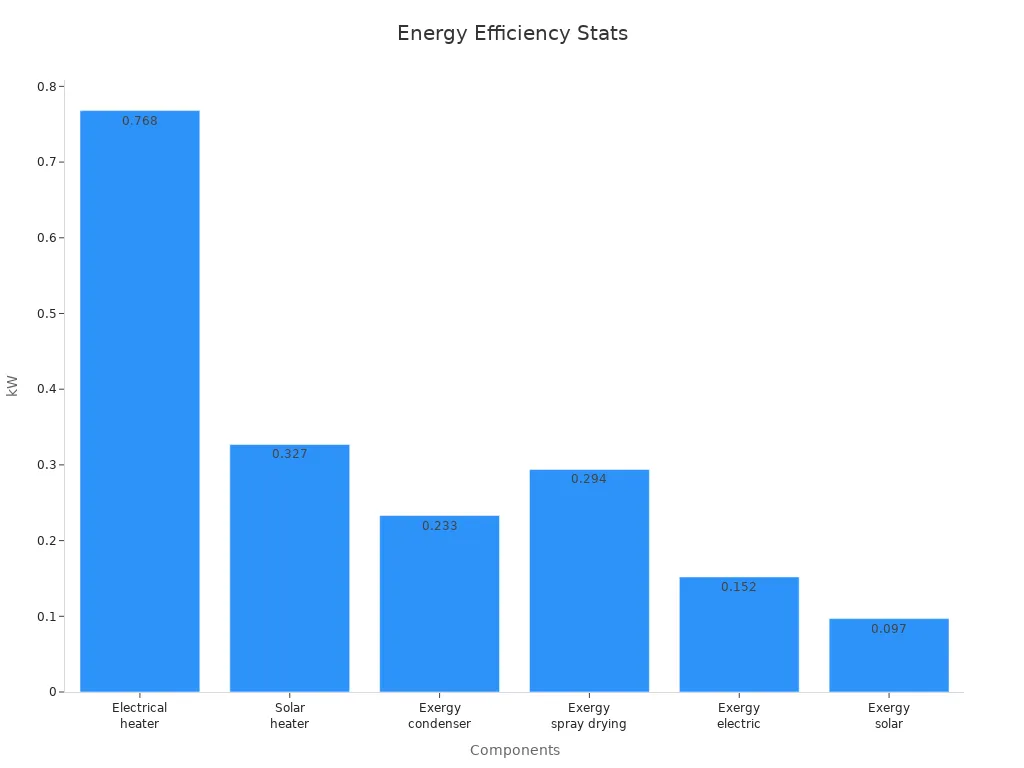
A análise exergética fornece ideias claras para fazer com que os secadores por spray funcionem melhor. Este método ajuda os engenheiros a fazer boas escolhas de projeto e economizar energia em fábricas reais.
Comparando cálculos de projeto de secador por spray
Precisão e Confiabilidade
Os engenheiros precisam de precisão e confiabilidade ao escolher métodos para cálculos de projeto de secador por spray. Métodos experimentais fornecem medições diretas. Isso ajuda a verificar se os modelos estão corretos e a tornar os resultados confiáveis. Modelos computacionais, como CFD e modelos termodinâmicos, adivinhe coisas importantes, como temperatura de saída, Tamanho da gota, e rendimento do produto. Esses modelos geralmente correspondem bem aos dados de teste reais. Por exemplo, em fazer remédios, um modelo baseado em dados previu o tamanho das partículas com alta precisão. Quase todos os erros foram menores que 2.5 micrômetros, que está sob 10% da faixa permitida. Isso significa que o modelo pode substituir os testes de laboratório e ajudar nas verificações em tempo real.. Os engenheiros podem confiar que esses modelos incluem itens importantes, como o tipo de bico de pulverização, viscosidade de alimentação, e densidade. Isso os torna bons para projetos pequenos e grandes.
Observação: Bons modelos significam menos experimentos e trabalho de design mais rápido.
Necessidades de recursos
As necessidades de recursos são importantes ao escolher um método para cálculos de projeto de secador por spray. Métodos experimentais precisam de equipamentos, materiais, e tempo para configurar e coletar dados. Por exemplo, um estudo utilizou um secador por spray Büchi Mini com taxa de alimentação de 2 mL/min e uma taxa de aspiração de 35 m³/h. O rendimento foi determinado pesando o pó seco e comparando-o com o material seco colocado no. Esses detalhes ajudam os engenheiros a planejar uma produção maior.
A tabela abaixo mostra as necessidades comuns de recursos para secagem por pulverização:
Categoria de recurso | Dados / Valores |
|---|---|
Capacidade de produção | Escala piloto: 1-5 kg/h de evaporação de água |
Pequena produção: 5-50 kg/h de evaporação de água | |
Produção média: 50-250 kg/h de evaporação de água | |
Grande indústria: 250-4,000+ kg/h de evaporação de água | |
Consumo de energia | Geralmente 1.2-1.7 kWh para cada kg de água evaporada |
Propriedades do feed | Viscosidade até 300 CP |
Conteúdo de sólidos 1-50% | |
Cronograma Operacional | Engenharia e design: 2-3 meses |
Fabricação de equipamentos: 3-8 meses | |
Instalação: 1-2 meses | |
Comissionamento e validação: 1-3 meses | |
Aumento da produção: 1-2 meses | |
Requisitos de manutenção | Custo anual de manutenção: 3-5% do custo inicial |
Atomizadores: 500-1000 horas, filtros de ar: mensal | |
Juntas e vedações: a cada três meses, verificações de controle: duas vezes por ano |
Métodos computacionais, como CFD, precisa de computadores fortes e software especial. Mas eles usam menos material físico e podem tornar o processo de design mais rápido. Os engenheiros devem pensar nessas necessidades e combiná-las com seus objetivos e orçamento.
Escalabilidade
A escalabilidade mostra se um método funciona tanto para pequenos laboratórios quanto para grandes fábricas. Os engenheiros testam isso verificando estimativas de modelos e resultados reais em diferentes tamanhos.
A secagem por pulverização foi feita de 5 gramas para 400 gramas usando três máquinas: Buchi B-290, Procept 4M8Trix, e FluidAir. Isso mostrou que o processo funcionou bem para diferentes tamanhos de lote.
Os testes mostraram que a acetona deixada no produto estava sob 1%, provando boa secagem em todos os tamanhos.
O rendimento do produto aumentou de 21% acabar 60% depois de alterar a temperatura de entrada e as configurações da máquina.
Modelos mecanísticos e CFD adivinharam o tamanho das gotas, velocidade de secagem, temperatura de saída, e rendimento. Essas suposições combinaram bem com os dados reais (R² > 0.80).
A separação por ciclone funcionou para partículas maiores que 18 micrômetros, com alta captação utilizando bons ciclones.
Os modelos CFD ajudaram a mostrar como o gás e as gotículas se moviam em secadores maiores. Isso ajudou os engenheiros a resolver problemas como quebra e aglomeração de partículas.
Alterando o fluxo do gás de secagem, temperatura de entrada, e o fluxo de alimentação com base nas estimativas do modelo reduziram o acúmulo de paredes e facilitaram a ampliação.
Em grandes fábricas de medicamentos, modelos previram o tamanho das partículas (dv50) muito bem. Quase todos os erros foram inferiores a 2.5 micrômetros, que está sob 10% da faixa permitida. Isso prova que modelos avançados podem ajudar em grandes produções e verificações de qualidade em tempo real. Os engenheiros podem usar esses métodos para projetar e melhorar secadores por spray para muitos usos.
Recomendações
Seleção de Método
A escolha do método certo para o projeto do secador por spray depende do que você deseja fazer, o que você tem, e o que seu produto precisa. Os engenheiros podem usar um plano passo a passo para escolher bem.
Comece com pequenos testes de secagem por pulverização. Isso ajuda a escolher polímeros e quantidades de medicamentos usando menos material.
Não use métodos antigos, como fundição com solvente. Estes não copiam a secagem por pulverização real e podem dar resultados errados.
Use secagem por spray de laboratório em todas as etapas da fabricação do produto. Isso melhora as suposições e elimina etapas extras.
Experimente um plano de três etapas. Isso pode usar 13 vezes menos material e leva 12 vezes menos tempo do que os velhos hábitos.
Verifique se lotes pequenos são iguais aos grandes. Coisas como mistura e temperatura de transição vítrea permanecem as mesmas, para que você possa mudar as coisas mais cedo.
Use ferramentas de laboratório comuns como mDSC, XRPD, e PLM. A maioria dos laboratórios tem estes, e eles trabalham para muitos projetos.
Escolha um método que atenda aos seus limites. Pense em quanto material você tem, quanto tempo você precisa, e como você deseja que seu produto seja.
Dica: Os engenheiros também devem olhar para o uso de energia, quanto eles podem ganhar, e quanto tempo duram as máquinas. Por exemplo, escolhendo um secador de spray que seja 30% maior pode ajudar se você quiser ganhar mais depois. Coisas materiais como a viscosidade da alimentação e como ela lida com o calor ajudam você a escolher o atomizador e a câmara certos. O dinheiro também importa, como quanto custa a máquina e quanto tempo leva para pagar.
Combinando abordagens
Usar métodos experimentais e computacionais juntos geralmente funciona melhor para projetos de secadores por spray. Engenheiros usam ambos para verificar modelos, faça designs melhores, e adivinhar as características do produto.
Simulações de CFD e dados de teste juntos podem mostrar onde as partículas aderem ou se aglomeram. Isso ajuda a encontrar o melhor bico e torna o produto mais uniforme.
Resultados do teste, como tamanho de gota e secagem, ajude a garantir que os modelos matemáticos estejam corretos. Esses modelos então adivinham como as mudanças afetam o tamanho das partículas, densidade, e umidade.
Usando modelos simples e detalhados permite que os engenheiros estudem coisas difíceis, como construção de paredes. Dados de teste sobre temperatura e umidade de saída ajudam a verificar esses modelos.
Juntar suposições de computador e resultados reais ajuda a criar designs melhores, aumentar, e operar secadores por spray.
Observação: Usar as duas formas ajuda os engenheiros a fazerem escolhas melhores, controlar o processo, e evite erros ao fazer mais produtos.
Tendências Futuras
O design do secador por spray continua mudando à medida que novas tecnologias e ideias surgem. Algumas tendências estão moldando o que vem a seguir.
A IA e o aprendizado de máquina ajudam a controlar o processo e a corrigir problemas antes que eles aconteçam. Essas ferramentas podem reduzir paradas surpresa em até 45%.
Gêmeos digitais fazem desenvolvimento 30-40% mais rápido. Eles ajudam no design e na execução de testes.
Os sistemas de recuperação de calor podem economizar 25-35% de energia, fazendo com que a secagem por spray consuma menos energia.
Circuitos fechados de água podem reduzir o uso de água em até 90%, o que é bom para o planeta.
Máquinas menores e modulares economizam 40-60% de espaço e facilitar a adição de mais posteriormente.
Novos materiais, como ligas especiais, ajude as máquinas a durar 40-50% mais longo.
Tecnologia híbrida, como secagem por spray ultrassônico, usa 15-20% menos energia e fabrica produtos melhores.
Ideias especiais, como secagem asséptica e nano-spray, ajuda com remédios e comida.
Os factos monetários mostram que a maioria dos novos sistemas se pagam em 2-4 anos porque custam menos e produzem produtos melhores.
O futuro terá inteligência, circuito fechado, e sistemas blockchain. Isso tornará a secagem por pulverização mais ecológica e inteligente.
Os engenheiros devem continuar aprendendo sobre essas tendências para se manterem à frente e garantir que o design do seu secador por spray esteja atualizado.
Os engenheiros percebem que o uso de métodos experimentais e computacionais ajuda no projeto do secador por spray. Dados experimentais comprovam se os resultados estão corretos. Os modelos computacionais permitem que os engenheiros experimentem novas ideias rapidamente. As equipes devem escolher um método que se adapte ao seu projeto e ao que elas têm. Usar as duas formas juntas geralmente dá melhores resultados. No futuro, a pesquisa pode analisar controles mais inteligentes e economizar mais energia.
Perguntas frequentes
Qual é a principal diferença entre métodos experimentais e computacionais?
Métodos experimentais usam medições reais de laboratório ou piloto secadores de spray. Os métodos computacionais usam modelos matemáticos e programas de computador para adivinhar os resultados. Ambas as formas ajudam os engenheiros a fabricar secadores por spray melhores, mas cada um tem seus próprios pontos fortes.
Por que os engenheiros combinam abordagens experimentais e computacionais?
Os engenheiros usam ambos para obter respostas mais precisas. Dados experimentais verificam se os modelos estão corretos. As ferramentas informáticas permitem-lhes experimentar muitas ideias rapidamente. Usar ambos ajuda a criar designs melhores e menos erros.
Como o CFD ajuda no projeto do secador por spray?
CFD, ou Dinâmica de Fluidos Computacional, mostra como o ar e as gotículas se movem dentro do secador. Engenheiros usam CFD para detectar problemas, testar novas ideias, e melhorar os produtos sem construir muitos secadores de teste.
Quais fatores afetam a escolha do método de design?
Engenheiros pensam sobre os objetivos do projeto, o que eles têm, o que o produto precisa, e quanto tempo eles têm. Eles também analisam o uso de energia, tamanho do equipamento, e custo. O melhor método depende dessas coisas.
Os modelos de secadores por spray podem prever a qualidade do produto?
Sim. Muitos modelos podem adivinhar coisas importantes como o tamanho das partículas, umidade, e rendimento. Os engenheiros usam essas suposições para controlar a qualidade e melhorar o processo de secagem.