Vibrating Fluid Bed Dryer Working Principle: Operation & Design Guide
7 Proven Vibrating Fluid Bed Dryer Working Principle Checks
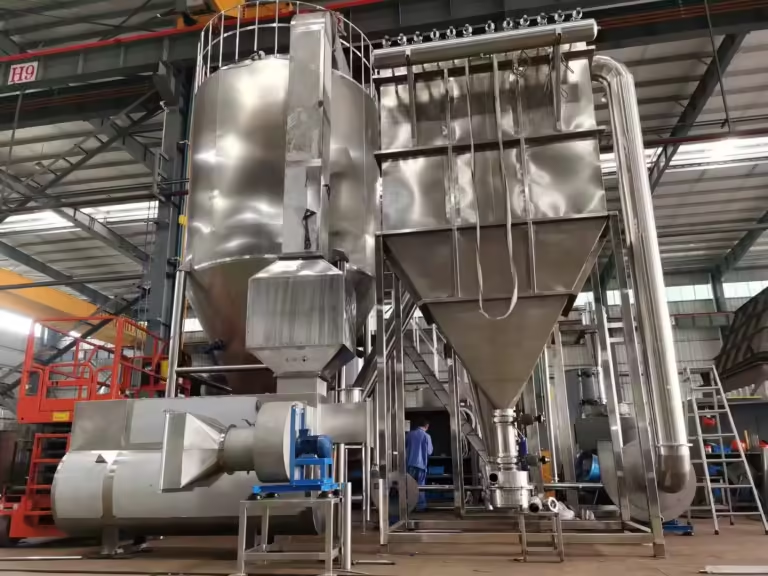
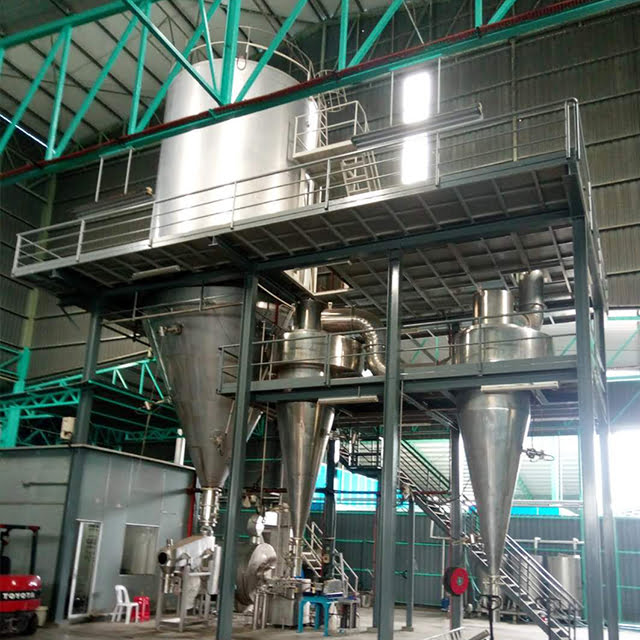
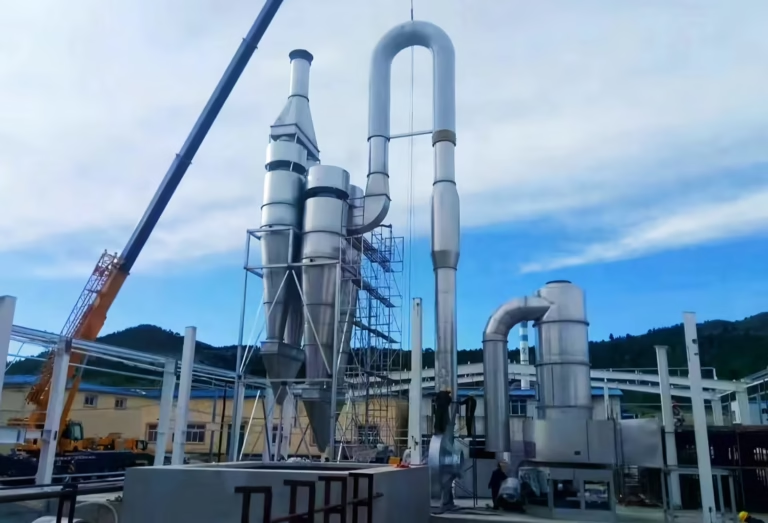
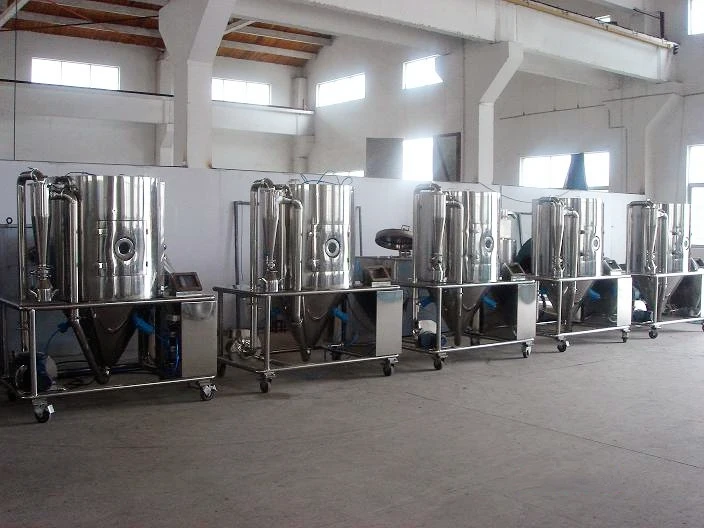
Processing dense chemical salts, crystal fertilizers, or sticky food granules in conventional static fluid beds frequently results in air channeling and dead zones. The vibrating fluid bed dryer working principle solves this operational challenge by combining mechanical vibration with pressurized upward thermal airflow. With 20 years of manufacturing experience at Jiangsu Changshi Drying Technology Co., Ltd (JSCSTECH), we build vibrating fluid bed systems for continuous, energy-efficient moisture removal.
How does the vibrating fluid bed dryer working principle achieve smooth fluidization?
Dual counter-rotating vibration motors generate a directional excitation force inclined at an angle of 30 to 60 degrees. This mechanical oscillation causes the entire bed of particles to jump upward and advance continuously along the perforated distribution plate. Simultaneously, conditioned hot air passes upward through the plate orifices, enveloping each granule in a thermal fluid envelope.
Because vibration overcomes inter-particle adhesion, the required air velocity is significantly lower than in static fluid beds. Lower air velocity reduces fan power consumption and prevents severe particle attrition on friable crystals. This synergy between vibration and fluidization enables stable drying of wide particle size distributions from 50 microns to 5 millimeters.
Why is multi-zone thermal airflow configuration critical for energy savings?
Moisture evaporation follows distinct drying kinetics: fast surface evaporation at the feed inlet followed by internal moisture diffusion toward the discharge. The entry zone requires higher air temperature and high flow volume to vaporize bulk surface water rapidly. Subsequent zones operate at lower temperatures to protect product chemistry and minimize thermal energy waste.
JSCSTECH divides the lower air plenum into isolated temperature compartments with independent airflow modulating dampers. A dedicated cooling zone at the discharge end lowers product temperature below 40 degrees Celsius for immediate bagging. Recirculating clean exhaust air through energy recovery exchangers reduces plant steam consumption by 20% to 30%.
What air distribution plate designs prevent particle weepage and plate fatigue?
The perforated air distribution deck is subjected to continuous cyclic vibrational stress and thermal expansion. Poorly fabricated plates crack along weld lines or allow small granules to weep downward into the bottom air plenum. We manufacture distribution decks using precision laser-perforated or directional fish-scale stainless steel plates.
In our 10,000 square meter facility, deck support structures are finite-element analyzed to eliminate resonant frequency destruction. Directional louvers impart a positive forward momentum to the material bed, preventing stagnation during unexpected feed surges. This robust mechanical construction ensures years of reliable operation in corrosive chemical and salt environments.
How do vibration isolation springs and dynamic balancing protect structural foundations?
Transmitting heavy vibrational energy into building floors can cause structural fatigue and severe workplace noise. Our vibrating fluid bed dryers incorporate heavy-duty rubber composite or high-grade alloy coil vibration isolation springs. The spring isolation system absorbs more than 95% of dynamic excitation forces before they reach the support floor.
Dual vibration motors are dynamically balanced and mounted on stress-relieved motor bridge assemblies. Flexible silicone or PTFE bellows isolate inlet air ducts, exhaust ports, and material feed chutes from vessel vibration. This ensures smooth, whisper-quiet operation complying with strict industrial health and safety standards.
Vibrating Fluid Bed Dryer Working Principle: Technical Parameter Matrix
| Operating Parameter | Vibrating Fluid Bed (JSCSTECH) | Standard Static Fluid Bed |
|---|---|---|
| Minimum Fluidization Air Velocity | 0.2 – 0.8 m/s (30%-50% lower) | 1.0 – 2.5 m/s (higher blower energy) |
| Material Transport Mode | Directional vibration throwing (controlled dwell) | Pure aerodynamic drag & gravity overflow |
| Wide Particle Size Suitability | Excellent (handles 50 μm to 5 mm) | Prone to channeling with irregular sizes |
| Air Distribution Deck | Laser-cut directional fish-scale plate | Standard mesh or sintered plate |
| Thermal Efficiency / Recovery | Up to 75% with zone recirculation | Typically 45% – 55% single-pass |
Supplier Audit Checklist: 5 Documents to Request Before Signing a Purchase Order
- Material Fluidization Test Report determining minimum fluidization velocity (Umf) and drying kinetics curve.
- Thermal Mass & Air Balance Calculation establishing heat exchanger sizing and fan static pressure requirements.
- Distribution Plate Finite Element Stress Analysis and weld non-destructive testing (NDT) records.
- Spring Vibration Isolation Efficiency Report and foundation dynamic load calculation sheet.
- Factory Acceptance Test (FAT) Protocol verifying vibration amplitude uniformity across the entire bed deck.
Frequently Asked Questions
Q: How does mechanical vibration prevent fluidization channeling in sticky or irregular granules? Continuous directional vibration imparts kinetic energy to the bottom material bed, breaking inter-particle liquid bridges before hot air enters. JSCSTECH tunes dual eccentric motors to fluidize dense particles at 30% to 50% lower air velocities than static beds. Request minimum fluidization velocity (Umf) testing prior to equipment sizing.
Q: What are the typical operating temperature zones in an industrial vibrating fluidized bed? Continuous dryers utilize modular heating, soaking, and integrated cooling zones along the fluid bed trough length. Our designs feature independent plenum chambers to prevent thermal shock and deliver granules cooled below 40 degrees Celsius for direct packaging. When reviewing proposals, inspect zone isolation baffle specifications.
Q: How is fine particle entrainment minimized during high-throughput fluid bed drying? An expanded upper disengagement chamber reduces exhaust air superficial velocity, allowing airborne fines to settle back onto the fluidized bed. We engineer integrated pulse-jet bag filters or high-efficiency cyclone recovery units. Request dust emission guarantee documentation below 10 mg/Nm³.
Explore our complete range of industrial drying equipment and study our fluid bed dryer troubleshooting checklist for maintenance protocols. You can also review our technical guide on the mesh belt dryer working principle for continuous processing.
For peer-reviewed research on vibrational hydrodynamics, consult the ScienceDirect fluidized bed vibration research. Contact Leta via WhatsApp: +86 137 7529 9712 to submit your particle specifications for a customized vibrating fluid bed engineering proposal.